

Abstract
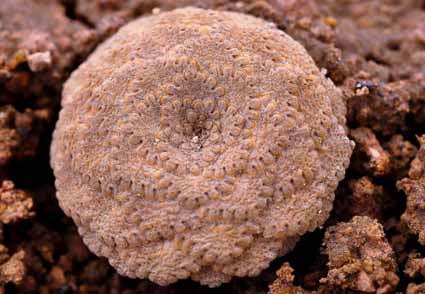
Two high Andean taxa from South Peru, Viola ornata and Viola longibracteolata, are described and illustrated. During a series of ecotourism and botanical expeditions in the Moquegua and Arequipa regions, four populations of V. ornata and one population of V. longibracteolata were discovered. Both species are compared with morphologically similar species of subg. Neoandinium. Their resemblances and differences are discussed, including by means of a key. We have determined the potential IUCN status of both new species as Critically Endangered (CR).
References
<p align="justify"><span style="color: #000000;"><span style="font-family: Times New Roman, serif;"><span style="font-size: small;">Arendt, J. & Reznick, D. (2008) Convergence and parallelism reconsidered: what have we learned about the genetics of adaptation? Trends in Ecology and Evolution 23: 26–32. https://doi.org/10.1016/j.tree.2007.09.011</span></span></span>
<p align="justify"><span style="color: #000000;"><span style="font-family: Times New Roman, serif;"><span style="font-size: small;">Baehni, C. & Weibel, R. (1941) Violaceae. In: Macbride, J.F. (Ed.) Flora of Peru. Publications of the Field Museum of Natural History, Botanical Series 13: 56–82.</span></span></span>
<p align="justify"><span style="color: #000000;"><span style="font-family: Times New Roman, serif;"><span style="font-size: small;">Ballard, H.E. & Iltis, H.H. (2012) Viola lilliputana sp. nov. (Viola sect. Andinium, Violaceae), one of the world’s smallest violets, from the Andes of Peru. Brittonia 64: 353–358.</span></span></span>
<p align="justify"><span style="color: #000000;"><span style="font-family: Times New Roman, serif;"><span style="font-size: small;">Ballard, H.E. & Sytsma, K.J. (2000) Evolution and biogeography of the woody Hawaiian violets (Viola, Violaceae): arctic origins, herbaceous ancestry and bird dispersal. Evolution 54: 1521–1532. https://doi.org/10.1111/j.0014-3820.2000.tb00698.x</span></span></span>
<p align="justify"><span style="color: #000000;"><span style="font-family: Times New Roman, serif;"><span style="font-size: small;">Ballard, H.E., Sytsma, K.J. & Kowal, R.R. (1999) Shrinking the violets: phylogenetic relationships of infrageneric groups of Viola (Violaceae) based on internal transcribed spacer DNA sequences. Systematic Botany 23: 439–458. https://doi.org/10.2307/2419376</span></span></span>
<p align="justify"><span style="color: #000000;"><span style="font-family: Times New Roman, serif;"><span style="font-size: small;">Becker, W. (1906) Violae andinae. Botanische Jahrbücher für Systematik, Pflanzengeschichte und Pflanzengeographie 37: 587–592.</span></span></span>
<p align="justify"><span style="color: #000000;"><span style="font-family: Times New Roman, serif;"><span style="font-size: small;">Becker, W. (1909) Zwei Violen aus Peru. Repertorium Specierum Novarum Regni Vegetabilis 7: 123–124.</span></span></span>
<p align="justify"><span style="color: #000000;"><span style="font-family: Times New Roman, serif;"><span style="font-size: small;">Becker, W. (1922) Violae novae Americae meridionalis. Repertorium novarum specierum regni vegetabilis 18: 180–186.</span></span></span>
<p align="justify"><span style="color: #000000;"><span style="font-family: Times New Roman, serif;"><span style="font-size: small;">Becker, W. (1925) Beitrag zur Kenntnis der südamerikanischen Violae. Repertorium Specierum Novarum Regni Vegetabilis 21: 349–361. https://doi.org/10.1002/fedr.19250212106</span></span></span>
<p align="justify"><span style="color: #000000;"><span style="font-family: Times New Roman, serif;"><span style="font-size: small;">Becker, W. (1926) Beiträge zur zur Violenflora Argentiniens und Chiles. Repertorium Specierum Novarum Regni Vegetabilis 23: 222–227. https://doi.org/10.1002/fedr.19260231206</span></span></span>
<p align="justify"><span style="color: #000000;"><span style="font-family: Times New Roman, serif;"><span style="font-size: small;">Becker, W. (1927) Zur Veichenflora Nord-Chiles. Repertorium Specierum Novarum Regni Vegetabilis 24: 109–112.</span></span></span>
<p align="justify"><span style="color: #000000;"><span style="font-family: Times New Roman, serif;"><span style="font-size: small;">Becker, W. (1928) On some violets from the Andes. Bulletin of Miscellaneous Information, Royal Gardens, Kew 1928: 134–140.</span></span></span>
<p align="justify"><span style="color: #000000;"><span style="font-family: Times New Roman, serif;"><span style="font-size: small;">Clausen, J. (1929) Chromosome number and relationship of some North American species of Viola. Annals of Botany 43: 741–764. https://doi.org/10.1093/oxfordjournals.aob.a090198 </span></span></span>
<p align="justify"><span style="color: #000000;"><span style="font-family: Times New Roman, serif;"><span style="font-size: small;">Gonzáles, P. & Cano, A. (2016) Two new species of Viola (Violaceae) named in honor of preceding Peruvian botanists. Phytotaxa 283: 83–90. https://doi.org/10.11646/phytotaxa.283.1.6</span></span></span>
<p align="justify"><span style="color: #000000;"><span style="font-family: Times New Roman, serif;"><span style="font-size: small;">Gonzáles, P. & Molina-Alor, J. (2020) Viola tovarii (Violaceae), a new species for Peruvian high Andes. Phytotaxa 451 (3): 245–250. https://doi.org/10.11646/phytotaxa.451.3.8</span></span></span>
<p align="justify"><span style="color: #000000;"><span style="font-family: Times New Roman, serif;"><span style="font-size: small;">Habel, J.C., Assmann, T., Schmitt, T. & Avise, J.C. (2010) Relict species: from past to future. In: Habel, J.C. & Assmann, T. (Eds.) Relict Species: Phytogeography and Conservation Biology. Springer-Verlag, Berlin, pp. 1–5.</span></span></span>
<p align="justify"><span style="color: #000000;"><span style="font-family: Times New Roman, serif;"><span style="font-size: small;">Hooker, W.J. & Arnott, G. (1833) Contributions towards a flora of South America and the islands of the Pacific. Botanical Miscellany 3: 129–212.</span></span></span>
<p align="justify"><span style="color: #000000;"><span style="font-family: Times New Roman, serif;"><span style="font-size: small;">IUCN. (2012) IUCN Red List Categories and Criteria: Version 3.1. Second edition. Gland, Switzerland and Cambridge, UK: IUCN. iv + 32 pp.</span></span></span>
<p align="justify"><span style="color: #000000;"><span style="font-family: Times New Roman, serif;"><span style="font-size: small;">IUCN. (2019) Guidelines for using the IUCN Red List categories and criteria, version 14. Prepared by the Standards and Petitions Subcommittee. Available from: http://www.iucnredlist.org/documents/RedListGuidelines.pdf (accessed 11 March 2022) </span></span></span>
<p align="justify"><span style="color: #000000;"><span style="font-family: Times New Roman, serif;"><span style="font-size: small;">Liesner, R.L. (1993) Violaceae. In: Brako, L. & Zarucchi, J.L. (Eds.) Catalogue of the flowering plants and gymnosperms of Peru. Monographs in systematic botany from the Missouri Botanical Garden 45: 1180–1184. </span></span></span>
<p align="justify"><span style="color: #000000;"><span style="font-family: Times New Roman, serif;"><span style="font-size: small;">Lindsay, K. & Horwith, B. (1999) A vegetation classification of St Kitts and Nevis: 69. Nevis Historical and Conservation Society, St Christopher Heritage Society. </span></span></span>
<p align="justify"><span style="color: #000000;"><span style="font-family: Times New Roman, serif;"><span style="font-size: small;">Marcussen, T., Heier, L., Brysting, A.K., Oxelman, B. & Jakobsen, K.S. (2015) From gene trees to a dated allopolyploid network: insights from the angiosperm genus Viola (Violaceae). Systematic Biology 64 (1): 84–101. https://doi.org/10.1093/sysbio/syu071</span></span></span>
<p align="justify"><span style="color: #000000;"><span style="font-family: Times New Roman, serif;"><span style="font-size: small;">Marcussen T, Ballard HE, Danihelka J, Flores AR, Nicola MV, Watson JM. (2022) A revised phylogenetic classification for Viola (Violaceae). Plants 11 (17): 1–135. https://doi.org/10.3390/plants11172224</span></span></span>
<p align="justify"><span style="color: #000000;"><span style="font-family: Times New Roman, serif;"><span style="font-size: small;">Montesinos-Tubée, D.B. (2011) Diversidad floristica de la cuence alta del Río Tambo- Ichuña (Moquegua, Perú). Revista Peruana de Biología 18: 119–132. https://doi.org/10.15381/rpb.v18i1.156</span></span></span>
<p align="justify"><span style="color: #000000;"><span style="font-family: Times New Roman, serif;"><span style="font-size: small;">Reiche, K.F. & Taubert, P.H.W. (1895) Violaceae. In: Engler, A. & Prantl, K.A.E. (Eds.) Die natürlichen Pflanzenfamilien. Teil III, abteilung 6. Leipzig, Wilhem Engelman, pp. 322–336.</span></span></span>
<p align="justify"><span style="color: #000000;"><span style="font-family: Times New Roman, serif;"><span style="font-size: small;">Rossow, R.A. (1993) Viola roigii (Violaceae) especie nueva de San Juan. Hickenia 2: 95–98.</span></span></span>
<p align="justify"><span style="color: #000000;"><span style="font-family: Times New Roman, serif;"><span style="font-size: small;">Thiers, B. (2016) Index Herbariorum: A global directory of public herbaria and associated staff. New York Botanical Garden’s Virtual Herbarium. Available from: http://sweetgum.nybg.org/science/ih/ (accessed 11 January 2022)</span></span></span>
<p align="justify"><span style="color: #000000;"><span style="font-family: Times New Roman, serif;"><span style="font-size: small;">Wahlert, G.A., Marcussen, T., de Paula-Souza, J., Feng, M. & Ballard, H.E. (2014) A phylogeny of the Violaceae (Malpighiales) inferred from plastid DNA sequences: implications for generic diversity and intrafamilial taxonomy. Systematic Botany 39: 239–252. https://doi.org/10.1600/036364414X678008</span></span></span>
<p align="justify"><span style="color: #000000;"><span style="font-family: Times New Roman, serif;"><span style="font-size: small;">Watson, J.M. & Flores, A.R. (2012a) Fire and ice: rosulate viola evolution. Part One—The stage is set. Rock Garden Quarterly, Bulletin of the North American Rock Garden Society 70 (4): 360–366.</span></span></span>
<p align="justify"><span style="color: #000000;"><span style="font-family: Times New Roman, serif;"><span style="font-size: small;">Watson, J.M. & Flores, A.R. (2013a) Fire and ice: rosulate viola evolution. Part Two—The drama unfolds. Rock Garden Quarterly, Bulletin of the North American Rock Garden Society 71 (1): 42–53.</span></span></span>
<p align="justify"><span style="color: #000000;"><span style="font-family: Times New Roman, serif;"><span style="font-size: small;">Watson, J.M. & Flores, A.R. (2013b) Fire and ice: rosulate viola evolution. Part Three—A merry life and a short one. Rock Garden Quarterly, Bulletin of the North American Rock Garden Society 71 (2): 118–141.</span></span></span>
<p align="justify"><span style="color: #000000;"><span style="font-family: Times New Roman, serif;"><span style="font-size: small;">Watson, J.M. & Flores, A.R. (2014) Upping their number, addressing their risk. Viola singularis (Violaceae) revisited, and an evaluation of sect. Andinium, its higher taxonomic group. Phytotaxa 177: 177–182. https://doi.org/10.11646/phytotaxa.177.3.6</span></span></span>
<p align="justify"><span style="color: #000000;"><span style="font-family: Times New Roman, serif;"><span style="font-size: small;">Watson, J.M., Flores, A.R., Nicola, M.V. & Marcussen, T. (2021) Viola subgenus Andinium, Preliminary Monograph. Scottish Rock Garden Club & International Rock Gardener, e-published, 215 pp.</span></span></span>
<p align="justify"><span style="color: #000000;"><span style="font-family: Times New Roman, serif;"><span style="font-size: small;">Weddell, H.A. (1864) Plantes inedites des Andes. Annales des Sciences Naturelles: Botanique, sér. V 1: 291–292.</span></span></span>
<p align="justify"><span style="color: #000000;"><span style="font-family: Times New Roman, serif;"><span style="font-size: small;">Baehni, C. & Weibel, R. (1941) Violaceae. In: Macbride, J.F. (Ed.) Flora of Peru. Publications of the Field Museum of Natural History, Botanical Series 13: 56–82.</span></span></span>
<p align="justify"><span style="color: #000000;"><span style="font-family: Times New Roman, serif;"><span style="font-size: small;">Ballard, H.E. & Iltis, H.H. (2012) Viola lilliputana sp. nov. (Viola sect. Andinium, Violaceae), one of the world’s smallest violets, from the Andes of Peru. Brittonia 64: 353–358.</span></span></span>
<p align="justify"><span style="color: #000000;"><span style="font-family: Times New Roman, serif;"><span style="font-size: small;">Ballard, H.E. & Sytsma, K.J. (2000) Evolution and biogeography of the woody Hawaiian violets (Viola, Violaceae): arctic origins, herbaceous ancestry and bird dispersal. Evolution 54: 1521–1532. https://doi.org/10.1111/j.0014-3820.2000.tb00698.x</span></span></span>
<p align="justify"><span style="color: #000000;"><span style="font-family: Times New Roman, serif;"><span style="font-size: small;">Ballard, H.E., Sytsma, K.J. & Kowal, R.R. (1999) Shrinking the violets: phylogenetic relationships of infrageneric groups of Viola (Violaceae) based on internal transcribed spacer DNA sequences. Systematic Botany 23: 439–458. https://doi.org/10.2307/2419376</span></span></span>
<p align="justify"><span style="color: #000000;"><span style="font-family: Times New Roman, serif;"><span style="font-size: small;">Becker, W. (1906) Violae andinae. Botanische Jahrbücher für Systematik, Pflanzengeschichte und Pflanzengeographie 37: 587–592.</span></span></span>
<p align="justify"><span style="color: #000000;"><span style="font-family: Times New Roman, serif;"><span style="font-size: small;">Becker, W. (1909) Zwei Violen aus Peru. Repertorium Specierum Novarum Regni Vegetabilis 7: 123–124.</span></span></span>
<p align="justify"><span style="color: #000000;"><span style="font-family: Times New Roman, serif;"><span style="font-size: small;">Becker, W. (1922) Violae novae Americae meridionalis. Repertorium novarum specierum regni vegetabilis 18: 180–186.</span></span></span>
<p align="justify"><span style="color: #000000;"><span style="font-family: Times New Roman, serif;"><span style="font-size: small;">Becker, W. (1925) Beitrag zur Kenntnis der südamerikanischen Violae. Repertorium Specierum Novarum Regni Vegetabilis 21: 349–361. https://doi.org/10.1002/fedr.19250212106</span></span></span>
<p align="justify"><span style="color: #000000;"><span style="font-family: Times New Roman, serif;"><span style="font-size: small;">Becker, W. (1926) Beiträge zur zur Violenflora Argentiniens und Chiles. Repertorium Specierum Novarum Regni Vegetabilis 23: 222–227. https://doi.org/10.1002/fedr.19260231206</span></span></span>
<p align="justify"><span style="color: #000000;"><span style="font-family: Times New Roman, serif;"><span style="font-size: small;">Becker, W. (1927) Zur Veichenflora Nord-Chiles. Repertorium Specierum Novarum Regni Vegetabilis 24: 109–112.</span></span></span>
<p align="justify"><span style="color: #000000;"><span style="font-family: Times New Roman, serif;"><span style="font-size: small;">Becker, W. (1928) On some violets from the Andes. Bulletin of Miscellaneous Information, Royal Gardens, Kew 1928: 134–140.</span></span></span>
<p align="justify"><span style="color: #000000;"><span style="font-family: Times New Roman, serif;"><span style="font-size: small;">Clausen, J. (1929) Chromosome number and relationship of some North American species of Viola. Annals of Botany 43: 741–764. https://doi.org/10.1093/oxfordjournals.aob.a090198 </span></span></span>
<p align="justify"><span style="color: #000000;"><span style="font-family: Times New Roman, serif;"><span style="font-size: small;">Gonzáles, P. & Cano, A. (2016) Two new species of Viola (Violaceae) named in honor of preceding Peruvian botanists. Phytotaxa 283: 83–90. https://doi.org/10.11646/phytotaxa.283.1.6</span></span></span>
<p align="justify"><span style="color: #000000;"><span style="font-family: Times New Roman, serif;"><span style="font-size: small;">Gonzáles, P. & Molina-Alor, J. (2020) Viola tovarii (Violaceae), a new species for Peruvian high Andes. Phytotaxa 451 (3): 245–250. https://doi.org/10.11646/phytotaxa.451.3.8</span></span></span>
<p align="justify"><span style="color: #000000;"><span style="font-family: Times New Roman, serif;"><span style="font-size: small;">Habel, J.C., Assmann, T., Schmitt, T. & Avise, J.C. (2010) Relict species: from past to future. In: Habel, J.C. & Assmann, T. (Eds.) Relict Species: Phytogeography and Conservation Biology. Springer-Verlag, Berlin, pp. 1–5.</span></span></span>
<p align="justify"><span style="color: #000000;"><span style="font-family: Times New Roman, serif;"><span style="font-size: small;">Hooker, W.J. & Arnott, G. (1833) Contributions towards a flora of South America and the islands of the Pacific. Botanical Miscellany 3: 129–212.</span></span></span>
<p align="justify"><span style="color: #000000;"><span style="font-family: Times New Roman, serif;"><span style="font-size: small;">IUCN. (2012) IUCN Red List Categories and Criteria: Version 3.1. Second edition. Gland, Switzerland and Cambridge, UK: IUCN. iv + 32 pp.</span></span></span>
<p align="justify"><span style="color: #000000;"><span style="font-family: Times New Roman, serif;"><span style="font-size: small;">IUCN. (2019) Guidelines for using the IUCN Red List categories and criteria, version 14. Prepared by the Standards and Petitions Subcommittee. Available from: http://www.iucnredlist.org/documents/RedListGuidelines.pdf (accessed 11 March 2022) </span></span></span>
<p align="justify"><span style="color: #000000;"><span style="font-family: Times New Roman, serif;"><span style="font-size: small;">Liesner, R.L. (1993) Violaceae. In: Brako, L. & Zarucchi, J.L. (Eds.) Catalogue of the flowering plants and gymnosperms of Peru. Monographs in systematic botany from the Missouri Botanical Garden 45: 1180–1184. </span></span></span>
<p align="justify"><span style="color: #000000;"><span style="font-family: Times New Roman, serif;"><span style="font-size: small;">Lindsay, K. & Horwith, B. (1999) A vegetation classification of St Kitts and Nevis: 69. Nevis Historical and Conservation Society, St Christopher Heritage Society. </span></span></span>
<p align="justify"><span style="color: #000000;"><span style="font-family: Times New Roman, serif;"><span style="font-size: small;">Marcussen, T., Heier, L., Brysting, A.K., Oxelman, B. & Jakobsen, K.S. (2015) From gene trees to a dated allopolyploid network: insights from the angiosperm genus Viola (Violaceae). Systematic Biology 64 (1): 84–101. https://doi.org/10.1093/sysbio/syu071</span></span></span>
<p align="justify"><span style="color: #000000;"><span style="font-family: Times New Roman, serif;"><span style="font-size: small;">Marcussen T, Ballard HE, Danihelka J, Flores AR, Nicola MV, Watson JM. (2022) A revised phylogenetic classification for Viola (Violaceae). Plants 11 (17): 1–135. https://doi.org/10.3390/plants11172224</span></span></span>
<p align="justify"><span style="color: #000000;"><span style="font-family: Times New Roman, serif;"><span style="font-size: small;">Montesinos-Tubée, D.B. (2011) Diversidad floristica de la cuence alta del Río Tambo- Ichuña (Moquegua, Perú). Revista Peruana de Biología 18: 119–132. https://doi.org/10.15381/rpb.v18i1.156</span></span></span>
<p align="justify"><span style="color: #000000;"><span style="font-family: Times New Roman, serif;"><span style="font-size: small;">Reiche, K.F. & Taubert, P.H.W. (1895) Violaceae. In: Engler, A. & Prantl, K.A.E. (Eds.) Die natürlichen Pflanzenfamilien. Teil III, abteilung 6. Leipzig, Wilhem Engelman, pp. 322–336.</span></span></span>
<p align="justify"><span style="color: #000000;"><span style="font-family: Times New Roman, serif;"><span style="font-size: small;">Rossow, R.A. (1993) Viola roigii (Violaceae) especie nueva de San Juan. Hickenia 2: 95–98.</span></span></span>
<p align="justify"><span style="color: #000000;"><span style="font-family: Times New Roman, serif;"><span style="font-size: small;">Thiers, B. (2016) Index Herbariorum: A global directory of public herbaria and associated staff. New York Botanical Garden’s Virtual Herbarium. Available from: http://sweetgum.nybg.org/science/ih/ (accessed 11 January 2022)</span></span></span>
<p align="justify"><span style="color: #000000;"><span style="font-family: Times New Roman, serif;"><span style="font-size: small;">Wahlert, G.A., Marcussen, T., de Paula-Souza, J., Feng, M. & Ballard, H.E. (2014) A phylogeny of the Violaceae (Malpighiales) inferred from plastid DNA sequences: implications for generic diversity and intrafamilial taxonomy. Systematic Botany 39: 239–252. https://doi.org/10.1600/036364414X678008</span></span></span>
<p align="justify"><span style="color: #000000;"><span style="font-family: Times New Roman, serif;"><span style="font-size: small;">Watson, J.M. & Flores, A.R. (2012a) Fire and ice: rosulate viola evolution. Part One—The stage is set. Rock Garden Quarterly, Bulletin of the North American Rock Garden Society 70 (4): 360–366.</span></span></span>
<p align="justify"><span style="color: #000000;"><span style="font-family: Times New Roman, serif;"><span style="font-size: small;">Watson, J.M. & Flores, A.R. (2013a) Fire and ice: rosulate viola evolution. Part Two—The drama unfolds. Rock Garden Quarterly, Bulletin of the North American Rock Garden Society 71 (1): 42–53.</span></span></span>
<p align="justify"><span style="color: #000000;"><span style="font-family: Times New Roman, serif;"><span style="font-size: small;">Watson, J.M. & Flores, A.R. (2013b) Fire and ice: rosulate viola evolution. Part Three—A merry life and a short one. Rock Garden Quarterly, Bulletin of the North American Rock Garden Society 71 (2): 118–141.</span></span></span>
<p align="justify"><span style="color: #000000;"><span style="font-family: Times New Roman, serif;"><span style="font-size: small;">Watson, J.M. & Flores, A.R. (2014) Upping their number, addressing their risk. Viola singularis (Violaceae) revisited, and an evaluation of sect. Andinium, its higher taxonomic group. Phytotaxa 177: 177–182. https://doi.org/10.11646/phytotaxa.177.3.6</span></span></span>
<p align="justify"><span style="color: #000000;"><span style="font-family: Times New Roman, serif;"><span style="font-size: small;">Watson, J.M., Flores, A.R., Nicola, M.V. & Marcussen, T. (2021) Viola subgenus Andinium, Preliminary Monograph. Scottish Rock Garden Club & International Rock Gardener, e-published, 215 pp.</span></span></span>
<p align="justify"><span style="color: #000000;"><span style="font-family: Times New Roman, serif;"><span style="font-size: small;">Weddell, H.A. (1864) Plantes inedites des Andes. Annales des Sciences Naturelles: Botanique, sér. V 1: 291–292.</span></span></span>