

Abstract
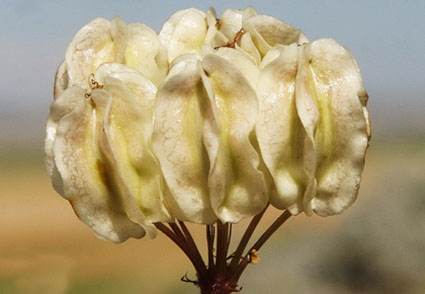
A new species, Prangos munzurensis (Apiaceae), is described and illustrated from Tunceli Province, Eastern Turkey. The new species is related to Prangos heyniae, P. abieticola, and P. denticulata and differs from them in the number of rays, length of bracts, indumentum of petals, ultimate segments of leaves, stylopodium features, fruit morphology and anatomy, and distributional range. It also differs from P. ferulacea in presence of furrows between blocks of inner mesocarp, number of umbel rays, and puberulous petals. A comprehensive description of the morphological and carpo-anatomical features, photographs, and data on the geographical distribution, habitat and ecology, and conservation status are also provided. In addition, P. munzurensis is recognized as a separate species by molecular analysis of nrITS/ETS.
References
<p align="justify"><span style="color: #000000;"><span style="font-family: Times New Roman, serif;"><span style="font-size: small;">Aytaç, Z. & Duman, H. (2016) Prangos abieticola (Apiaceae), a new species from South Anatolia, Turkey. Edinburgh Journal of Botany 73 (1): 125–131. https://doi.org/10.1017/S0960428615000293</span></span></span>
<p align="justify"><span style="color: #000000;"><span style="font-family: Times New Roman, serif;"><span style="font-size: small;">Behçet, L., Yapar, Y. & Olgun, ?. (2019) Prangos aricakensis (Apiaceae), a new species from eastern Turkey. Phytotaxa 401 (1): 55–63. https://doi.org/10.11646/phytotaxa.401.1.5</span></span></span>
<p align="justify"><span style="color: #000000;"><span style="font-family: Times New Roman, serif;"><span style="font-size: small;">Boissier, P.E. (1844) Plantae Aucherianae. Annales des sciences naturelles. Botanique 3 (2): 46–96.</span></span></span>
<p align="justify"><span style="color: #000000;"><span style="font-family: Times New Roman, serif;"><span style="font-size: small;">Boissier, E. (1872) Flora orientalis sive, enumeratio plantarum in Oriente a Graecia et Aegypto ad Indiae fines hucusque observatae 2. H.Georg, Genève, Basel & Lyon, 1159 pp.</span></span></span>
<p align="justify"><span style="color: #000000;"><span style="font-family: Times New Roman, serif;"><span style="font-size: small;">Candolle, A.P. de (1830) Prodromus systematis naturalis regni vegetabilis 4. Treuttel & Würtz, Paris, 683 pp.</span></span></span>
<p align="justify"><span style="color: #000000;"><span style="font-family: Times New Roman, serif;"><span style="font-size: small;">Duman, H. & Watson, M.F. (1999) Ekimia, a new genus of Umhelliferae, and two new taxa of Prangos Lindl. (Umbelliferae) from southern Turkey. Edinburgh Journal of Botany 56 (2): 199–209. https://doi.org/10.1017/S0960428600001086</span></span></span>
<p align="justify"><span style="color: #000000;"><span style="font-family: Times New Roman, serif;"><span style="font-size: small;">Duran, A., Sa??ro?lu, M. & Duman, H. (2005) Prangos turcica (Apiaceae), a new species from South Anatolia, Turkey. Annales Botanici Fennici 42 (1): 67–72.</span></span></span>
<p align="justify"><span style="color: #000000;"><span style="font-family: Times New Roman, serif;"><span style="font-size: small;">Edgar, R.C. (2004) MUSCLE: multiple sequence alignment with high accuracy and high throughput. Nucleic Acids Research 32 (5): 1792–1797. https://doi.org/10.1093/nar/gkh340</span></span></span>
<p align="justify"><span style="color: #000000;"><span style="font-family: Times New Roman, serif;"><span style="font-size: small;">Ekim, T., Koyuncu, M., Vural, M., Duman, H., Aytaç, Z. & Ad?guzel, N. (2000) Red Data Book of Turkish Plants (Pteridophyta & Spermatophyta). Türkiye Tabiat?n? Koruma Derne?i & Van Yüzüncü Y?l Üniversitesi, Ankara, 246 pp.</span></span></span>
<p align="justify"><span style="color: #000000;"><span style="font-family: Times New Roman, serif;"><span style="font-size: small;">Ericson, P., Svennblad, B., Britton, T. & Oxelman, B. (2003) Reliability of Bayesian posterior probabilities and bootstrap frequencies in phylogenetics. Systematic Biology 52: 665–673. https://doi.org/10.1080/10635150390235485</span></span></span>
<p align="justify"><span style="color: #000000;"><span style="font-family: Times New Roman, serif;"><span style="font-size: small;">Fischer, F.E.L. & Meyer, C.A. (1854) Plantes nouvelles recueilliés par M. de Tchihatcheff, en Asie Mineure. Annales des Sciences Naturelles (Paris), sér. 4 1: 30–36.</span></span></span>
<p align="justify"><span style="color: #000000;"><span style="font-family: Times New Roman, serif;"><span style="font-size: small;">Hall, T.A. (1999) BioEdit: a user-friendly biological sequence alignment editor and analysis program for Windows 95/98/NT. Nucleic Acids Symposium Series 41: 95–98.</span></span></span>
<p align="justify"><span style="color: #000000;"><span style="font-family: Times New Roman, serif;"><span style="font-size: small;">Herrnstadt, I. & Heyn, C.C. (1972) Prangos Lindl. In: Davis, P.H. (Ed.) Flora of Turkey and the East Aegean Islands, vol. 4. Edinburgh University Press, Edinburgh, pp. 382?388.</span></span></span>
<p align="justify"><span style="color: #000000;"><span style="font-family: Times New Roman, serif;"><span style="font-size: small;">Herrnstadt, I. & Heyn, C.C. (1997) Neocryptodiscus papillaris (Boiss) Hernst. & Heyn – a new combination based on Cachrys papillaris Boiss. Candollea 52: 181?184.</span></span></span>
<p align="justify"><span style="color: #000000;"><span style="font-family: Times New Roman, serif;"><span style="font-size: small;">Hilliard, O.M. & Burtt, B.L. (1985) Conium (Umbelliferae) in southern Africa. South African Journal of Botany 51 (6): 465?474.</span></span></span>
<p align="justify"><span style="color: #000000;"><span style="font-family: Times New Roman, serif;"><span style="font-size: small;">Hoang, D.T., Chernomor, O., von Haeseler, A., Minh, B.Q. & Vinh, L.S. (2018) UFBoot2: Improving the ultrafast bootstrap approximation. Molecular Biology and Evolution 35: 518–522.</span></span></span>
<p align="justify"><span style="color: #000000;"><span style="font-family: Times New Roman, serif;"><span style="font-size: small;">IUCN Standards and Petitions Subcommittee (2019) Guidelines for Using the IUCN Red List Categories and Criteria, version 14. Avaible from: http://www.iucnredlist.org (accessed 24 May 2021).</span></span></span>
<p align="justify"><span style="color: #000000;"><span style="font-family: Times New Roman, serif;"><span style="font-size: small;">Kljuykov, E.V., Liu, M., Ostroumova, T.A., Pimenov, M.G., Tilney, P.M. & van Wyk, B.-E. (2004) Towards a standardized terminology for taxonomically important morphological characters in the Umbelliferae. South African Journal of Botany 70 (3): 488–496.</span></span></span>
<p align="justify"><span style="color: #000000;"><span style="font-family: Times New Roman, serif;"><span style="font-size: small;">Koch, W.D.J. (1824) Generum tribuumque Umbelliferarum nova dispositio. Nova Acta Physico-Medica Academiae Caesareae Leopoldino-Carolinae Naturae Curiosorum 12 (1): 55–156.</span></span></span>
<p align="justify"><span style="color: #000000;"><span style="font-family: Times New Roman, serif;"><span style="font-size: small;">Lindley, J. (1825) Some account of the Prangos Hay Plant of Northern India. Quarterly Journal of Science, Literature and the Arts 19: 1–7.</span></span></span>
<p align="justify"><span style="color: #000000;"><span style="font-family: Times New Roman, serif;"><span style="font-size: small;">Linnaeus, C. (1753) Species plantarum. Impensis Laurentii Salvii, Holmiae, 1200 pp.</span></span></span>
<p align="justify"><span style="color: #000000;"><span style="font-family: Times New Roman, serif;"><span style="font-size: small;">Linnaeus, C. (1762) Species plantarum ed. 2, vol. 1. Impensis Laurentii Salvii, Holmiae, 784 pp.</span></span></span>
<p align="justify"><span style="color: #000000;"><span style="font-family: Times New Roman, serif;"><span style="font-size: small;">Logacheva, M.D., Valiejo-Roman, C.M., Degtjareva, G.V., Stratton, J.M., Downie, S.R., Samigullin, T.H. & Pimenov, M.G. (2010) A comparison of nrDNA ITS and ETS loci for phylogenetic inference in the Umbelliferae: an example from tribe Tordylieae. Molecular Phylogenetics and Evolution 57: 471–476. https://doi.org/10.1016/j.ympev.2010.06.001</span></span></span>
<p align="justify"><span style="color: #000000;"><span style="font-family: Times New Roman, serif;"><span style="font-size: small;">Lyskov, D.F., Kljuykov, E.V., Samigullin, T.H., Ukrainskaja, U.A. & Khrustaleva, I.A. (2016) Prangos multicostata (Apiaceae), a new species from eastern Kazakhstan. Phytotaxa 277 (1): 68–76. https://doi.org/10.11646/phytotaxa.277.1.6</span></span></span>
<p align="justify"><span style="color: #000000;"><span style="font-family: Times New Roman, serif;"><span style="font-size: small;">Lyskov, D.F., Degtjareva, G.V., Samigullin, T.H. & Pimenov, M.G. (2017) The revision of Prangos subsections Koelzella and Fedtschenkoana (Apiaceae) with some notes to phylogeny and biogeography of the genus: molecular and morphological evidences. Plant Systematics and Evolution 303 (7): 815–826. https://doi.org/10.1007/s00606-017-1412-0</span></span></span>
<p align="justify"><span style="color: #000000;"><span style="font-family: Times New Roman, serif;"><span style="font-size: small;">Menemen, Y. (2012) Prangos papillaris. In: Güner, A., Aslan, S., Ekim, T., Vural, M. & Babaç, M.T. (Eds.) Türkiye Bitkileri Listesi (Damarl? Bitkiler). Nezahat Gökyi?it Botanik Bahçesi ve Flora Ara?t?rmalar? Derne?i Yay?n?, Istanbul, pp. 76.</span></span></span>
<p align="justify"><span style="color: #000000;"><span style="font-family: Times New Roman, serif;"><span style="font-size: small;">Menemen, Y., Aytaç, Z. & Kandemir, A. (2016) Türkçe bilimsel bitki adlar? yönergesi. Ba?bahçe Bilim Dergisi 3 (3): 1?3. [In Turkish]</span></span></span>
<p align="justify"><span style="color: #000000;"><span style="font-family: Times New Roman, serif;"><span style="font-size: small;">Minh, B.Q., Schmidt, H.A., Chernomor, O., Schrempf, D., Woodhams, M.D., von Haeseler, A. & Lanfear, R. (2020) IQ-TREE 2: New models and efficient methods for phylogenetic inference in the genomic era. Molecular Biology and Evolution 37: 1530–1534. https://doi.org/10.1093/molbev/msaa015</span></span></span>
<p align="justify"><span style="color: #000000;"><span style="font-family: Times New Roman, serif;"><span style="font-size: small;">Özhatay, N. & Kandemir, A. (2014) Allium erzincanicum sect. Allium: Do?u Anadolu Bölgesi ‘nden yeni bir So?an Allium L. türü. Ba?bahçe Bilim Dergisi 1 (2): 50–58. [In Turkish]</span></span></span>
<p align="justify"><span style="color: #000000;"><span style="font-family: Times New Roman, serif;"><span style="font-size: small;">Page, R.D.M. (1996) TREEVIEW: An application to display phylogenetic trees on personal computers. Computer applications in the biosciences 12: 357–358. https://doi.org/10.1093/bioinformatics/12.4.357</span></span></span>
<p align="justify"><span style="color: #000000;"><span style="font-family: Times New Roman, serif;"><span style="font-size: small;">Pimenov, M.G. & Tikhomirov, V.N. (1983) The taxonomic problems in the genera Prangos Lindl., Cachrys L., Cryptodiscus Schrenk and Hippomarathrum Hoffmgg. et Link. Feddes Repertorium 94: 145–164. https://doi.org/10.1002/fedr.4910940302</span></span></span>
<p align="justify"><span style="color: #000000;"><span style="font-family: Times New Roman, serif;"><span style="font-size: small;">Pimenov, M.G. & Leonov, M.V. (1993) The genera of the Umbelliferae. Royal Botanic Gardens, Kew, 156 pp.</span></span></span>
<p align="justify"><span style="color: #000000;"><span style="font-family: Times New Roman, serif;"><span style="font-size: small;">Pimenov, M.G., Akalin, E. & Kljuykov, E. (2005) Prangos ilanae (Umbelliferae), a new species from Western Turkey. Candollea 60 (2): 379–385.</span></span></span>
<p align="justify"><span style="color: #000000;"><span style="font-family: Times New Roman, serif;"><span style="font-size: small;">Ronquist, F., Teslenko, M., van der Mark, P., Ayres, D.L., Darling, A., Höhna, S., Larget, B., Liu, L., Suchard, M.A. & Huelsenbeck, J.P. (2012) MrBayes 3.2: efficient Bayesian phylogenetic inference and model choice across a large model space. Systematic Biology 61: 539–542. https://doi.org/10.1093/sysbio/sys029</span></span></span>
<p align="justify"><span style="color: #000000;"><span style="font-family: Times New Roman, serif;"><span style="font-size: small;">?enol, S., Y?ld?r?m, H. & Seçmen, Ö. (2011) Prangos hulusii sp. nov. (Apiaceae) from West Anatolia, Turkey. Nordic Journal of Botany 29 (4): 402–407. https://doi.org/10.1111/j.1756-1051.2011.01097.x</span></span></span>
<p align="justify"><span style="color: #000000;"><span style="font-family: Times New Roman, serif;"><span style="font-size: small;">Swofford, D.L. (2003) PAUP* Phylogenetic analysis using parsimony (* and other methods), version 4. Sinauer Associates, Sunderland, 142 pp.</span></span></span>
<p align="justify"><span style="color: #000000;"><span style="font-family: Times New Roman, serif;"><span style="font-size: small;">Tchihatscheff, P.A. (1860) Asie Mineure. Description physique, statistique et archéologique de cette contrée. Troisième partie. Botanique 1. Paris, pp. I–LVI, 1–484. https://doi.org/10.5962/bhl.title.12040</span></span></span>
<p align="justify"><span style="color: #000000;"><span style="font-family: Times New Roman, serif;"><span style="font-size: small;">Thiers, B. (2018) Index Herbariorum: a global directory of public herbaria and associated staff. New York Botanical Garden’s Virtual Herbarium. Available at: http://sweetgum.nybg.org/ih (accessed 20 May 2021)</span></span></span>
<p align="justify"><span style="color: #000000;"><span style="font-family: Times New Roman, serif;"><span style="font-size: small;">Valiejo-Roman, C.M., Terentieva, E.I., Samigullin, T.H. & Pimenov, M.G. (2002) Relationships among genera in Saniculoideae and selected Apioideae (Umbelliferae) inferred from nrITS sequences. Taxon 51: 91–101. https://doi.org/10.2307/1554966</span></span></span>
<p align="justify"><span style="color: #000000;"><span style="font-family: Times New Roman, serif;"><span style="font-size: small;">Valiejo-Roman, C.M., Terentieva, E.I., Samigullin, T.H., Pimenov, M.G., Ghahremani-Nejad, F. & Mozaffarian, V. (2006) Molecular data (nrITS-sequencing) reveal relationships among Iranian endemic taxa of the Umbelliferae. Feddes Repertorium: Zeitschrift für botanische Taxomonie und Geobotanik 117 (5–6): 367?388. https://doi.org/10.1002/fedr.200611106</span></span></span>
<p align="justify"><span style="color: #000000;"><span style="font-family: Times New Roman, serif;"><span style="font-size: small;">Y?ld?r?ml?, ?. (1989) Munzur Da?lar?n?n yeni, ilginç ve tükenen türleri. Hacettepe Fen ve Mühendislik Bilimleri Dergisi 10: 39?47. [In Turkish]</span></span></span>
<p align="justify"><span style="color: #000000;"><span style="font-family: Times New Roman, serif;"><span style="font-size: small;">Y?ld?r?ml?, ?. (1993) Cerasus erzincanica (Rosaceae), a new species from Turkey. Candollea 48 (1): 115?118.</span></span></span>
<p align="justify"><span style="color: #000000;"><span style="font-family: Times New Roman, serif;"><span style="font-size: small;">Y?ld?r?ml?, ?. (1995) Flora of Munzur Da?lar? (Erzincan-Tunceli). Ot Sistematik Botanik Dergisi 2 (1): 1?78.</span></span></span>
<p align="justify"><span style="color: #000000;"><span style="font-family: Times New Roman, serif;"><span style="font-size: small;">Y?ld?r?ml?, ?. (2010) Some new taxa, records and taxonomic treatments from Turkey. Ot Sistematik Botanik Dergisi 17 (2): 1?114.</span></span></span>