

Abstract
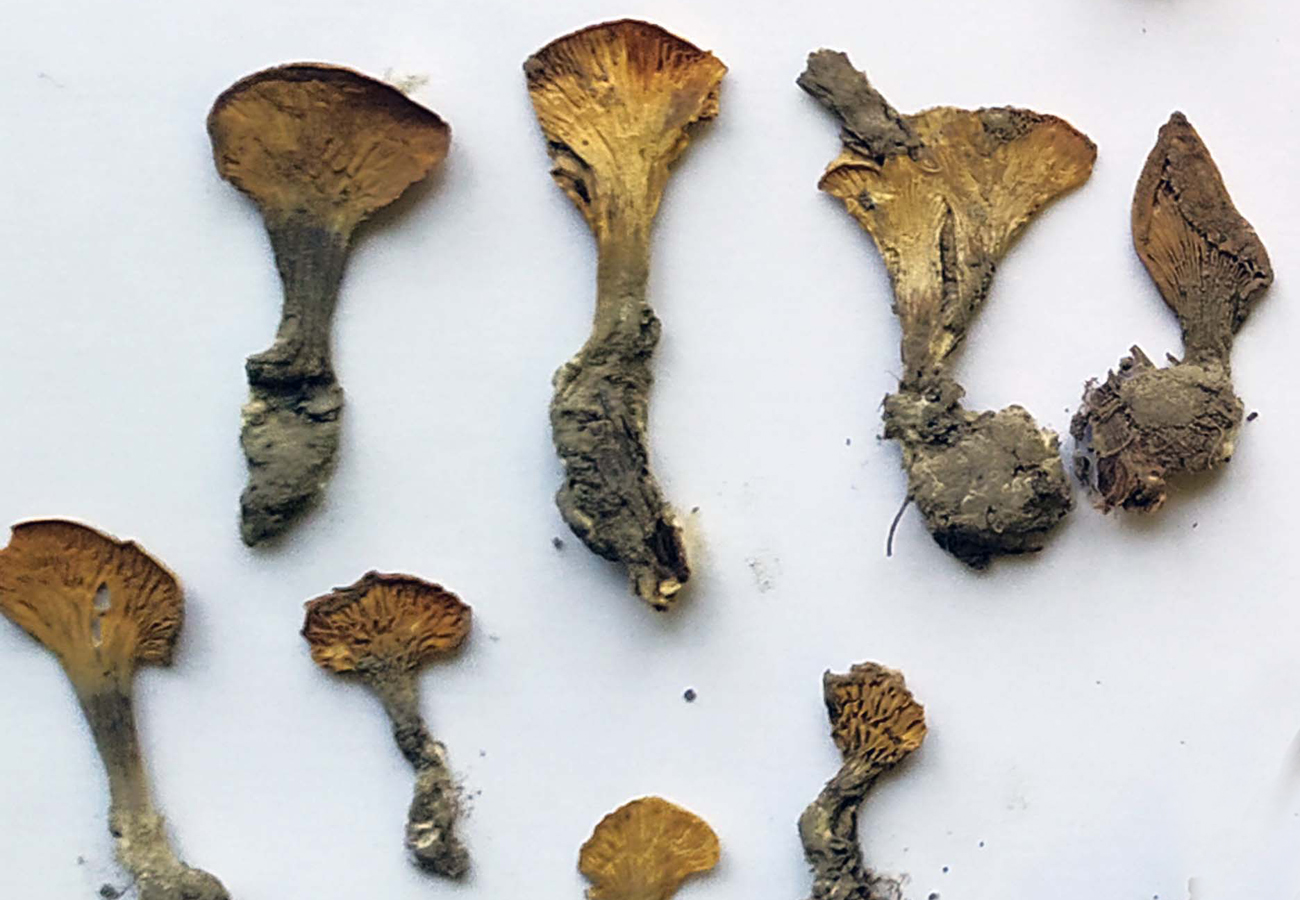
We studied the type specimens of Pleurotus komarnitzkyi to clarify its taxonomic status. Unlike other species in this genus which grow on wood, P. komarnitzkyi is ecologically distinct as it grows at the base of woody stems of desert herbaceous plants. In addition, its fruiting bodies are small in size, which is not typical for the Pleurotus species. Substrate preferences and morphology of fruiting bodies of P. komarnitzkyi resemble those of Hohenbuehelia species. Based on an analysis of ITS and LSU nrDNA sequences, we propose a new combination in the genus Hohenbuehelia.
References
Altschul, S., Gish, W., Miller, W., Myers, E. & Lipman, D. (1990) Basic local alignment search tool. Journal of Molecular Biology 215 (3): 403–410.
https://doi.org/10.1016/S0022-2836(05)80360-2
Elborne, S.A. (2012) Hohenbuehelia Schulzer. In: Knudsen, H. & Vesterholt, J. (Eds.) Funga Nordica. Nordsvamp, Copenhagen, pp. 366–374.
Felsenstein, J. (1981) Evolutionary trees from DNA sequences: a maximum likelihood approach. Journal of Molecular Evolution 17: 368–376.
https://doi.org/10.1007/BF01734359
Gardes, M. & Bruns, T.D. (1993) ITS primers with enhanced specificity for basidiomycetes-application to the identification of mycorrhizae and rusts. Molecular Ecology 2: 113–118.
https://doi.org/10.1111/j.1365-294x.1993.tb00005.x
Katoh, K. & Standley, D.M. (2013) MAFFT Multiple Sequence Alignment Software Version 7: Improvements in Performance and Usability. Molecular Biology and Evolution 30 (4): 772–780.
https://doi.org/10.1093/molbev/mst010
Katoh, K. & Toh, H. (2008) Recent developments in the MAFFT multiple sequence alignment program. Briefings in bioinformatics 9 (4): 286–298.
https://doi.org/10.1093/bib/bbn013
Koziak, A.T., Cheng, K.C. & Thorn, R.G. (2007) Phylogenetic analyses of Nematoctonus and Hohenbuehelia (Pleurotaceae). Canadian Journal of Botany 85: 762–773.
https://doi.org/10.1139/B07-083
Kumar, S., Stecher, G., Li, M., Knyaz, C. & Tamura, K. (2018) MEGA X: Molecular Evolutionary Genetics Analysis across computing platforms. Molecular Biology and Evolution 35: 1547–1549.
https://doi.org/10.1093/molbev/msy096
Rambaut, A. (2018) FigTree v.1.4.4. Available from: http://tree.bio.ed.ac.uk/software/figtree/ (Accessed 22 June 2022)
Thorn, R.G. & Barron, G.L. (1986) Nematoctonus and the tribe Resupinateae in Ontario, Canada. Mycotaxon 25 (2): 321–453.
Consiglio, G., Setti, L. & Thorn, R.G. (2018) New species of Hohenbuehelia, with comments on the Hohenbuehelia atrocoerulea—Nematoctonus robustus species complex. Persoonia 41: 202–212.
https://doi.org/10.3767/persoonia.2018.41.10
Trifinopoulos, J., Nguyen, L.-T., von Haeseler, A.& Minh, B.Q. (2016) W-IQ-TREE: a fast online phylogenetic tool for maximum likelihood analysis. Nucleic Acids Research 44 (W1): 232–235.
https://doi.org/10.1093/nar/gkw256
Vassilkov, B.P. (1961) Three distinctive species of cap mushrooms on herbaceous plants. ?eská Mykologie 15 (1): 31–34.
Vilgalys, R. & Hester, M. (1990) Rapid genetic identification and mapping of enzymatically amplified ribosomal DNA from several Cryptococcus species. Journal of Bacteriology 172: 4239–4246.
https://doi.org/10.1128/jb.172.8.4238-4246.1990
https://doi.org/10.1016/S0022-2836(05)80360-2
Elborne, S.A. (2012) Hohenbuehelia Schulzer. In: Knudsen, H. & Vesterholt, J. (Eds.) Funga Nordica. Nordsvamp, Copenhagen, pp. 366–374.
Felsenstein, J. (1981) Evolutionary trees from DNA sequences: a maximum likelihood approach. Journal of Molecular Evolution 17: 368–376.
https://doi.org/10.1007/BF01734359
Gardes, M. & Bruns, T.D. (1993) ITS primers with enhanced specificity for basidiomycetes-application to the identification of mycorrhizae and rusts. Molecular Ecology 2: 113–118.
https://doi.org/10.1111/j.1365-294x.1993.tb00005.x
Katoh, K. & Standley, D.M. (2013) MAFFT Multiple Sequence Alignment Software Version 7: Improvements in Performance and Usability. Molecular Biology and Evolution 30 (4): 772–780.
https://doi.org/10.1093/molbev/mst010
Katoh, K. & Toh, H. (2008) Recent developments in the MAFFT multiple sequence alignment program. Briefings in bioinformatics 9 (4): 286–298.
https://doi.org/10.1093/bib/bbn013
Koziak, A.T., Cheng, K.C. & Thorn, R.G. (2007) Phylogenetic analyses of Nematoctonus and Hohenbuehelia (Pleurotaceae). Canadian Journal of Botany 85: 762–773.
https://doi.org/10.1139/B07-083
Kumar, S., Stecher, G., Li, M., Knyaz, C. & Tamura, K. (2018) MEGA X: Molecular Evolutionary Genetics Analysis across computing platforms. Molecular Biology and Evolution 35: 1547–1549.
https://doi.org/10.1093/molbev/msy096
Rambaut, A. (2018) FigTree v.1.4.4. Available from: http://tree.bio.ed.ac.uk/software/figtree/ (Accessed 22 June 2022)
Thorn, R.G. & Barron, G.L. (1986) Nematoctonus and the tribe Resupinateae in Ontario, Canada. Mycotaxon 25 (2): 321–453.
Consiglio, G., Setti, L. & Thorn, R.G. (2018) New species of Hohenbuehelia, with comments on the Hohenbuehelia atrocoerulea—Nematoctonus robustus species complex. Persoonia 41: 202–212.
https://doi.org/10.3767/persoonia.2018.41.10
Trifinopoulos, J., Nguyen, L.-T., von Haeseler, A.& Minh, B.Q. (2016) W-IQ-TREE: a fast online phylogenetic tool for maximum likelihood analysis. Nucleic Acids Research 44 (W1): 232–235.
https://doi.org/10.1093/nar/gkw256
Vassilkov, B.P. (1961) Three distinctive species of cap mushrooms on herbaceous plants. ?eská Mykologie 15 (1): 31–34.
Vilgalys, R. & Hester, M. (1990) Rapid genetic identification and mapping of enzymatically amplified ribosomal DNA from several Cryptococcus species. Journal of Bacteriology 172: 4239–4246.
https://doi.org/10.1128/jb.172.8.4238-4246.1990