
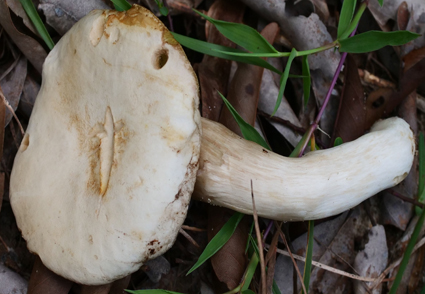

Abstract
Boletus littoreus (Boletaceae, Boletales) is described as a new species from tropical China based on morphological and molecular evidence from the nuclear ribosomal large subunit RNA (28S), the translation elongation factor 1-α gene (TEF1), and the RNA polymerase II second largest subunit gene (RPB2). It is morphologically characterized by white basidiomata, a stipe without reticulations, a pileipellis composed of elliptic-fusiform to subglobose, sometimes filamentous, chains of hyphae, and is associated with trees of Dipterocarpaceae. An illustrated morphological description is provided along with comparison to related and similar species.
References
Águeda, B., Parladé, J., de Miguel, A.M. & Martínez-Peña, F. (2006) Characterization and identification of field ectomycorrhizae of Boletus edulis and Cistus ladanifer. Mycologia 98: 23–30. https://dx.doi.org/10.1080/15572536.2006.11832709
Arora, D. (2008) California porcini: three new taxa, observations on their harvest, and the tragedy of no commons. Economic Botany 62: 356–375.
Arora, D. & Frank, J. (2014) Boletus rubriceps, a new species of porcini from the southwestern USA. North American Fungi 9: 1–11.
Bessette, A.E., Bessette, A.R. & Roody, W.C. (2000) North American boletes: a color guide to the fleshy pored mushrooms. Syracuse University Press, New York, 400 pp.
Beugelsdijk, D.C.M., Van Der Linde, S., Zuccarello, G.C., Den Bakker, H.C., Draisma, S.G.A. & Noordeloos, M.E. (2008) A phylogenetic study of Boletus section Boletus in Europe. Persoonia 20: 1–7. https://dx.doi.org/10.3767/003158508X283692
Bulliard, J.B.F. (1782) Herbier de la France. Paris, 60 pp.
Corner, E.J.H. (1972) Boletus in Malaysia. Botanic Gardens, Singapore, 263 pp.
Cui, Y.Y., Feng, B., Wu, G., Xu, J. & Yang, Z.L. (2016) Porcini mushrooms (Boletus sect. Boletus) from China. Fungal Diversity 81: 189–212. https://doi.org/10.1007/s13225-015-0336-7
Dentinger, B.T., Ammirati, J.F., Both, E.E., Desjardin, D.E., Halling, R.E., Henkel, T.W., Moreau, P.A., Nagasawa, E., Soytong, K., Taylor, A.F., Watling, R., Moncalvo, J.M. & McLaughlin, D.J. (2010) Molecular phylogenetics of porcini mushrooms (Boletus section Boletus). Molecular Phylogenetics and Evolution 57: 1276–1292. https://doi.org/10.1016/j.ympev.2010.10.004
Dentinger, B.T., Didukh, M.Y. & Moncalvo, J.M. (2011) Comparing COI and ITS as DNA barcode markers for mushrooms and allies (Agaricomycotina). PLoS one 6: e25081. https://doi.org/10.1371/journal.pone.0025081
Edgar, R.C. (2004) MUSCLE: multiple sequence alignment with high accuracy and high throughput. Nucleic Acids Research 32: 1792–1797. https://doi.org/10.1093/nar/gkh340
Feng, B., Xu, J.P., Wu, G., Hosen, M.I., Zeng, N.K., Li, Y.C., Tolgor, B., Kost, G.W. & Yang, Z.L. (2012) DNA sequence analyses reveal abundant diversity, endemism and evidence for Asian origin of the porcini mushrooms. PLoS one 7: e37567. https://doi.org/10.1371/journal.pone.0037567
Garrido, N. (1988) Agaricales s.l. und ihre Mykorrhizen in den Nothofagus-Wäldern Mittelchiles. Bibliotheca Mycologica 120: 1–528.
Gelardi M (2020) Diversity, biogeographic distribution, ecology, and ectomycorrhizal relationships of the edible porcini mushrooms (Boletus s. str., Boletaceae) worldwide: state of the art and an annotated checklist. In: Pérez-Moreno, J., Guerin-Laguette, A., Arzú, R.F., Yu, F.Q. (Eds.) Mushrooms, humans and nature in a changing world: perspectives from ecological, agricultural and social sciences. Springer, Cham, pp. 223–271. https://doi.org/10.1007/978-3-030-37378-8_8
Hall, T.A. (1999) BioEdit: a user-friendly biological sequence alignment editor and analyses program for Windows 95/98/NT. Nucleic acids symposium series 41: 95–98.
Halling, R.E., Desjardin, D.E., Fechner, N., Arora, D., Soytong, K. & Dentinger, B.T. (2014) New porcini (Boletus sect. Boletus) from Australia and Thailand. Mycologia 106: 830–834. https://doi.org/10.3852/13-340
Halling, R.E., Nuhn, M., Fechner, N.A., Osmundson, T.W., Soytong, K., Arora, D., Hibbett, D.S. & Binder, M. (2012) Sutorius: a new genus for Boletus eximius. Mycologia 104: 951– 961. http://dx.doi.org/10.3852/11-376
Huelsenbeck, J.P. & Ronquist, F. (2005) Bayesian analysis of molecular evolution using MrBayes. In: Nielsen, R. (Ed.) Statistical methods in molecular evolution. Springer, New York, pp. 183–226. https://doi.org/10.1007/0-387-27733-1_7
James, T.Y., Kauff, F., Schoch, C., Matheny, P.B., Hofstetter, V., Cox, C., Celio, G., Gueidan, C., Fraker, E., Miadlikowska, J., Lumbsch, H.T., Rauhut, A., Reeb, V ., Arnold, A.E., Amtoft, A., Stajich, J.E., Hosaka, K., Sung, G.H., Johnson, D., O’Rourke, B., Crockett, M., Binder, M., Curtis, J.M., Slot, J.C., Wang, Z., Wilson, A.W., Schüßler, A., Longcore, J.E., O’Donnell, K., Mozley-Standridge, S., Porter, D., Letcher, P.M., Powell, M.J., Taylor, J.W., White, M.M., Griffith, G.W., Davies, D.R., Humber, R.A., Morton, J.B., Sugiyama, J., Rossman, A.Y., Rogers, J.D., Pfister, D.H., Hewitt, D., Hansen, K., Hambleton, S., Shoemaker, R.A., Kohlmeyer, J., Volkmann-Kohlmeyer, B., Spotts, R.A., Serdani, M., Crous, P.W., Hughes, K.W., Matsuura, K., Langer, E., Langer, G., Untereiner, W.A., Lücking, R., Büdel, B., Geiser, D.M., Aptroot, A., Diederich, P., Schmitt, I., Schultz, M., Yahr, R., Hibbett, D., Lutzoni, F., McLaughlin, D., Spatafora, J. & Vilgalys, R. (2006) Reconstructing the early evolution of the fungi using a six gene phylogeny. Nature 443: 818–822. https://dx.doi.org/10.1038/nature05110
Johnson, M., Zaretskaya, I., Raytselis, Y., Merezhuk, Y., McGinnis, S. & Madden, T.L. (2008) NCBI BLAST: a better web interface. Nucleic Acids Research 36: W5–W9. https://doi.org/10.1093/nar/gkn201
Kan, G.S., Jiao, L.M., Yang, Y.H. & Chen, H.M. (2009) Study on the antioxidative activities of extracellular polysaccharide of Boletus edulis Bull. Food and Fermentation Industries 35 (2): 57–60.
Kornerup, A. & Wanscher, J.H. (1981) Taschenlexikon der Farben. 3. Aufl. Muster-Schmidt Verlag, Göttingen, 242 pp.
Kuo, M. & Ortiz-Santana, B. (2020) Revision of leccinoid fungi, with emphasis on North American taxa, based on molecular and morphological data. Mycologia 112: 197–211.
Linné, C. (1753) Species plantarum, vol. 2, ed. 1. Laurent Salvii, Stockholm, 1152 pp.
Luki?, N. (2009) The distribution and diversity of Boletus genus in central Serbia. Kragujevac Journal of Science 31: 59–68.
Luo, A., Luo, A., Huang, J. & Fan, Y. (2012) Purification, characterization, and antioxidant activities in vitro and in vivo of the polysaccharides from Boletus edulis Bull. Molecules 17: 8079–8090. https://doi.org/10.3390/molecules17078079
Muñoz, J.A. (2005) Fungi Europaei 2: Boletus s.l.: Strobilomycetaceae, Gyroporaceae, Gyrodontaceae, Suillaceae, Boletaceae. Edizioni Candusso, Alassio, 952 pp.
Nagasawa, E. (1994) A new species of Boletus sect. Boletus from Japan. Proceedings of the Japan Academy, Series B 70: 10–14.
Nuhn, M.E., Binder, M., Taylor, A.F., Halling, R.E. & Hibbett, D.S. (2013) Phylogenetic overview of the Boletineae. Fungal Biology 117: 479–511. https://dx.doi.org/10.1016/j.funbio.2013.04.008
Nylander, J.A.A. (2004) MrModeltest 2.3. Program distributed by the author. Evolutionary Biology Center, Uppsala University.
Persoon, C.H. (1825) Mycologia Europaea. Impensibus Joanni Jacobi Palmii, Erlangen, 214 pp.
Sarwar, S., Jabeen, S., Ahmad, I., Dentinger, B. & Khalid, A.N. (2018) Boletus himalayensis (Basidiomycota; Boletales), a new porcini species from Pakistan. Turkish Journal of Botany 42: 790–800.
Singer, R. (1986) The agaricales in modern taxonomy, 4th edn. Koeltz Scientific Books, Koenigstein, 1069 pp.
Smith, A.H. & Thiers, H.D. (1971) The boletes of Michigan. University of Michigan Press, Ann Arbor, 438 pp.
Smith, S.A. & Dunn, C.W. (2008) Phyutility: a phyloinformatics tool for trees, alignments and molecular data. Bioinformation 24: 715–716.
Stamatakis, A. (2006) RAxML-VI-HPC: maximum likelihood based phylogenetic analyses with thousands of taxa and mixed models. Bioinformatics 22: 2688–2690. https://doi.org/10.1093/bioinformatics/btl446
Sun, L. Liu, Q., Bao, C. & Fan, J. (2017) Comparison of free total amino acid compositions and their functional classifications in 13 wild edible mushrooms. Molecules 22: 350. https://doi.org/10.3390/molecules22030350
Tan, Y., Zeng, N.K. & Xu, B. (2022) Chemical profiles and health-promoting effects of porcini mushroom (Boletus edulis): A narrative review. Food Chemistry 390: 133199. https://doi.org/10.1016/j.foodchem.2022.133199
Vilgalys, R. & Hester, M. (1990) Rapid genetic identification and mapping of enzymatically amplified ribosomal DNA from several Cryptococcus species. Journal of Bacteriology 172: 4238–4246. http://dx.doi.org/10.1128/jb.172.8.4238-4246.1990
Wang, Q.B. & Yao, Y.J. (2005) Boletus reticuloceps, a new combination for Aureoboletus reticuloceps. Sydowia 57: 131–136.
Wang, D., Sun, S.Q., Wu, W.Z., Yang, S.L. & Tan, J.M. (2014) Characterization of a water-soluble polysaccharide from Boletus edulis and its antitumor and immunomodulatory activities on renal cancer in mice. Carbohydrate Polymers 105: 127–134. https://doi.org/10.1016/j.carbpol.2013.12.085
White, T.J., Bruns, T., Lee, S.J.W.T. & Taylor, J. (1990) Amplification and direct sequencing of fungal ribosomal RNA genes for phylogenies. In: Innis, M.A., Gelfand, D.H., Sninsky, J.J. & White, T.J. (Eds.) PCR protocols: a guide to methods and applications. Academic Press, New York, pp. 315–322.
Wu, G., Feng, B., Xu, J.P., Zhu, X.T., Li, Y.C., Zeng, N.K., Hosen, M.I. & Yang, Z.L. (2014) Molecular phylogenetic analyses redefine seven major clades and reveal 22 new generic clades in the fungal family Boletaceae. Fungal Diversity 69: 93–115.
Wu, G. Li, Y.C., Zhu, X.T., Zhao, K., Han, L.H., Cui, Y.Y., Li, F., Xu, J.P. & Yang, Z.L. (2016a) One hundred noteworthy boletes from China. Fungal Diversity 81: 25–188. https://doi.org/10.1007/s13225-016-0375-8
Wu, S., Wang, G., Yang, R. & Cui, Y. (2016b) Anti-inflammatory effects of Boletus edulis polysaccharide on asthma pathology. American Journal of Translational Research 8: 4478–4489.
Xiao, Y.H., Xu, Q., Zhou, X.H., Liu, N., Gou, Z.W. & Li, S.T. (2018) The improvement effect of Boletus edulis polysaccharides on the liver injury in type 2 diabetic rats. Science and Technology of Food Industry 39: 297–300, 313. https://doi.org/10.13386/j.issn1002-0306.2018.11.051
Zang, M., Yuan, M.S. & Gong, M.Q. (1993) Notes on and additions to Chinese members of the Boletales. Acta Mycologica Sinica 12: 275–282.
Zeng, N.K., Tang, L.P., Li, Y.C., Tolgor, B., Zhu, X.T., Zhao, Q. & Yang, Z.L. (2013) The genus Phylloporus (Boletaceae, Boletales) from China: morphological and multilocus DNA sequence analyses. Fungal Diversity 58: 73–101. https://doi.org/10.1007/s13225-012-0184-7
Zeng, N.K., Liang, Z.Q. & Yang, Z.L. (2014) Boletus orientialbus, a new species with white basidioma from subtropical China. Mycoscience 55: 159–163.
Zhang, Y.X., Zhang, R.J., Xing, F.W., Qin, X.S. & Chen, H.F. (2007) Community diversity of the Vatica mangachapoi forests in Wanning, Hainan Islands. Acta Botanica Boreali-Occidentalia Sinica 27 (7): 1454–1460.
Zhang, A., Xiao, N., He, P. & Sun, P. (2011) Chemical analysis and antioxidant activity in vitro of polysaccharides extracted from Boletus edulis. International Journal of Biological Macromolecules 49: 1092–1095. https://doi.org/10.1016/j.ijbiomac.2011.09.005
Zhang, L., Hu, Y., Duan, X., Tang, T., Shen, Y., Hu, B., Liu, A., Chen, H., Li, C. & Liu, Y. (2018) Characterization and antioxidant activities of polysaccharides from thirteen Boletus mushrooms. International Journal of Biological Macromolecules 113: 1–7. https://doi.org/10.1016/j.ijbiomac.2018.02.084
Zheng, S., Li, C., Ng, T.B. & Wang, H.X. (2007) A lectin with mitogenic activity from the edible wild mushroom Boletus edulis. Process Biochemistry 42: 1620–1624. https://doi.org/10.1016/j.procbio.2007.09.004
Zhu, J. & Jia, Y. (2018a) Decolorization technique optimization for Boletus edulis polysaccharides and the antioxidant activity. Chinese Traditional Patent Medicine 40 (4): 825–830.
Zhu, J. & Jia, Y. (2018b) Research on extraction technology and intervention of constipation of dietary fiber from Boletus edulis. Strait Pharmaceutical Journal 30 (6): 31–33.
Arora, D. (2008) California porcini: three new taxa, observations on their harvest, and the tragedy of no commons. Economic Botany 62: 356–375.
Arora, D. & Frank, J. (2014) Boletus rubriceps, a new species of porcini from the southwestern USA. North American Fungi 9: 1–11.
Bessette, A.E., Bessette, A.R. & Roody, W.C. (2000) North American boletes: a color guide to the fleshy pored mushrooms. Syracuse University Press, New York, 400 pp.
Beugelsdijk, D.C.M., Van Der Linde, S., Zuccarello, G.C., Den Bakker, H.C., Draisma, S.G.A. & Noordeloos, M.E. (2008) A phylogenetic study of Boletus section Boletus in Europe. Persoonia 20: 1–7. https://dx.doi.org/10.3767/003158508X283692
Bulliard, J.B.F. (1782) Herbier de la France. Paris, 60 pp.
Corner, E.J.H. (1972) Boletus in Malaysia. Botanic Gardens, Singapore, 263 pp.
Cui, Y.Y., Feng, B., Wu, G., Xu, J. & Yang, Z.L. (2016) Porcini mushrooms (Boletus sect. Boletus) from China. Fungal Diversity 81: 189–212. https://doi.org/10.1007/s13225-015-0336-7
Dentinger, B.T., Ammirati, J.F., Both, E.E., Desjardin, D.E., Halling, R.E., Henkel, T.W., Moreau, P.A., Nagasawa, E., Soytong, K., Taylor, A.F., Watling, R., Moncalvo, J.M. & McLaughlin, D.J. (2010) Molecular phylogenetics of porcini mushrooms (Boletus section Boletus). Molecular Phylogenetics and Evolution 57: 1276–1292. https://doi.org/10.1016/j.ympev.2010.10.004
Dentinger, B.T., Didukh, M.Y. & Moncalvo, J.M. (2011) Comparing COI and ITS as DNA barcode markers for mushrooms and allies (Agaricomycotina). PLoS one 6: e25081. https://doi.org/10.1371/journal.pone.0025081
Edgar, R.C. (2004) MUSCLE: multiple sequence alignment with high accuracy and high throughput. Nucleic Acids Research 32: 1792–1797. https://doi.org/10.1093/nar/gkh340
Feng, B., Xu, J.P., Wu, G., Hosen, M.I., Zeng, N.K., Li, Y.C., Tolgor, B., Kost, G.W. & Yang, Z.L. (2012) DNA sequence analyses reveal abundant diversity, endemism and evidence for Asian origin of the porcini mushrooms. PLoS one 7: e37567. https://doi.org/10.1371/journal.pone.0037567
Garrido, N. (1988) Agaricales s.l. und ihre Mykorrhizen in den Nothofagus-Wäldern Mittelchiles. Bibliotheca Mycologica 120: 1–528.
Gelardi M (2020) Diversity, biogeographic distribution, ecology, and ectomycorrhizal relationships of the edible porcini mushrooms (Boletus s. str., Boletaceae) worldwide: state of the art and an annotated checklist. In: Pérez-Moreno, J., Guerin-Laguette, A., Arzú, R.F., Yu, F.Q. (Eds.) Mushrooms, humans and nature in a changing world: perspectives from ecological, agricultural and social sciences. Springer, Cham, pp. 223–271. https://doi.org/10.1007/978-3-030-37378-8_8
Hall, T.A. (1999) BioEdit: a user-friendly biological sequence alignment editor and analyses program for Windows 95/98/NT. Nucleic acids symposium series 41: 95–98.
Halling, R.E., Desjardin, D.E., Fechner, N., Arora, D., Soytong, K. & Dentinger, B.T. (2014) New porcini (Boletus sect. Boletus) from Australia and Thailand. Mycologia 106: 830–834. https://doi.org/10.3852/13-340
Halling, R.E., Nuhn, M., Fechner, N.A., Osmundson, T.W., Soytong, K., Arora, D., Hibbett, D.S. & Binder, M. (2012) Sutorius: a new genus for Boletus eximius. Mycologia 104: 951– 961. http://dx.doi.org/10.3852/11-376
Huelsenbeck, J.P. & Ronquist, F. (2005) Bayesian analysis of molecular evolution using MrBayes. In: Nielsen, R. (Ed.) Statistical methods in molecular evolution. Springer, New York, pp. 183–226. https://doi.org/10.1007/0-387-27733-1_7
James, T.Y., Kauff, F., Schoch, C., Matheny, P.B., Hofstetter, V., Cox, C., Celio, G., Gueidan, C., Fraker, E., Miadlikowska, J., Lumbsch, H.T., Rauhut, A., Reeb, V ., Arnold, A.E., Amtoft, A., Stajich, J.E., Hosaka, K., Sung, G.H., Johnson, D., O’Rourke, B., Crockett, M., Binder, M., Curtis, J.M., Slot, J.C., Wang, Z., Wilson, A.W., Schüßler, A., Longcore, J.E., O’Donnell, K., Mozley-Standridge, S., Porter, D., Letcher, P.M., Powell, M.J., Taylor, J.W., White, M.M., Griffith, G.W., Davies, D.R., Humber, R.A., Morton, J.B., Sugiyama, J., Rossman, A.Y., Rogers, J.D., Pfister, D.H., Hewitt, D., Hansen, K., Hambleton, S., Shoemaker, R.A., Kohlmeyer, J., Volkmann-Kohlmeyer, B., Spotts, R.A., Serdani, M., Crous, P.W., Hughes, K.W., Matsuura, K., Langer, E., Langer, G., Untereiner, W.A., Lücking, R., Büdel, B., Geiser, D.M., Aptroot, A., Diederich, P., Schmitt, I., Schultz, M., Yahr, R., Hibbett, D., Lutzoni, F., McLaughlin, D., Spatafora, J. & Vilgalys, R. (2006) Reconstructing the early evolution of the fungi using a six gene phylogeny. Nature 443: 818–822. https://dx.doi.org/10.1038/nature05110
Johnson, M., Zaretskaya, I., Raytselis, Y., Merezhuk, Y., McGinnis, S. & Madden, T.L. (2008) NCBI BLAST: a better web interface. Nucleic Acids Research 36: W5–W9. https://doi.org/10.1093/nar/gkn201
Kan, G.S., Jiao, L.M., Yang, Y.H. & Chen, H.M. (2009) Study on the antioxidative activities of extracellular polysaccharide of Boletus edulis Bull. Food and Fermentation Industries 35 (2): 57–60.
Kornerup, A. & Wanscher, J.H. (1981) Taschenlexikon der Farben. 3. Aufl. Muster-Schmidt Verlag, Göttingen, 242 pp.
Kuo, M. & Ortiz-Santana, B. (2020) Revision of leccinoid fungi, with emphasis on North American taxa, based on molecular and morphological data. Mycologia 112: 197–211.
Linné, C. (1753) Species plantarum, vol. 2, ed. 1. Laurent Salvii, Stockholm, 1152 pp.
Luki?, N. (2009) The distribution and diversity of Boletus genus in central Serbia. Kragujevac Journal of Science 31: 59–68.
Luo, A., Luo, A., Huang, J. & Fan, Y. (2012) Purification, characterization, and antioxidant activities in vitro and in vivo of the polysaccharides from Boletus edulis Bull. Molecules 17: 8079–8090. https://doi.org/10.3390/molecules17078079
Muñoz, J.A. (2005) Fungi Europaei 2: Boletus s.l.: Strobilomycetaceae, Gyroporaceae, Gyrodontaceae, Suillaceae, Boletaceae. Edizioni Candusso, Alassio, 952 pp.
Nagasawa, E. (1994) A new species of Boletus sect. Boletus from Japan. Proceedings of the Japan Academy, Series B 70: 10–14.
Nuhn, M.E., Binder, M., Taylor, A.F., Halling, R.E. & Hibbett, D.S. (2013) Phylogenetic overview of the Boletineae. Fungal Biology 117: 479–511. https://dx.doi.org/10.1016/j.funbio.2013.04.008
Nylander, J.A.A. (2004) MrModeltest 2.3. Program distributed by the author. Evolutionary Biology Center, Uppsala University.
Persoon, C.H. (1825) Mycologia Europaea. Impensibus Joanni Jacobi Palmii, Erlangen, 214 pp.
Sarwar, S., Jabeen, S., Ahmad, I., Dentinger, B. & Khalid, A.N. (2018) Boletus himalayensis (Basidiomycota; Boletales), a new porcini species from Pakistan. Turkish Journal of Botany 42: 790–800.
Singer, R. (1986) The agaricales in modern taxonomy, 4th edn. Koeltz Scientific Books, Koenigstein, 1069 pp.
Smith, A.H. & Thiers, H.D. (1971) The boletes of Michigan. University of Michigan Press, Ann Arbor, 438 pp.
Smith, S.A. & Dunn, C.W. (2008) Phyutility: a phyloinformatics tool for trees, alignments and molecular data. Bioinformation 24: 715–716.
Stamatakis, A. (2006) RAxML-VI-HPC: maximum likelihood based phylogenetic analyses with thousands of taxa and mixed models. Bioinformatics 22: 2688–2690. https://doi.org/10.1093/bioinformatics/btl446
Sun, L. Liu, Q., Bao, C. & Fan, J. (2017) Comparison of free total amino acid compositions and their functional classifications in 13 wild edible mushrooms. Molecules 22: 350. https://doi.org/10.3390/molecules22030350
Tan, Y., Zeng, N.K. & Xu, B. (2022) Chemical profiles and health-promoting effects of porcini mushroom (Boletus edulis): A narrative review. Food Chemistry 390: 133199. https://doi.org/10.1016/j.foodchem.2022.133199
Vilgalys, R. & Hester, M. (1990) Rapid genetic identification and mapping of enzymatically amplified ribosomal DNA from several Cryptococcus species. Journal of Bacteriology 172: 4238–4246. http://dx.doi.org/10.1128/jb.172.8.4238-4246.1990
Wang, Q.B. & Yao, Y.J. (2005) Boletus reticuloceps, a new combination for Aureoboletus reticuloceps. Sydowia 57: 131–136.
Wang, D., Sun, S.Q., Wu, W.Z., Yang, S.L. & Tan, J.M. (2014) Characterization of a water-soluble polysaccharide from Boletus edulis and its antitumor and immunomodulatory activities on renal cancer in mice. Carbohydrate Polymers 105: 127–134. https://doi.org/10.1016/j.carbpol.2013.12.085
White, T.J., Bruns, T., Lee, S.J.W.T. & Taylor, J. (1990) Amplification and direct sequencing of fungal ribosomal RNA genes for phylogenies. In: Innis, M.A., Gelfand, D.H., Sninsky, J.J. & White, T.J. (Eds.) PCR protocols: a guide to methods and applications. Academic Press, New York, pp. 315–322.
Wu, G., Feng, B., Xu, J.P., Zhu, X.T., Li, Y.C., Zeng, N.K., Hosen, M.I. & Yang, Z.L. (2014) Molecular phylogenetic analyses redefine seven major clades and reveal 22 new generic clades in the fungal family Boletaceae. Fungal Diversity 69: 93–115.
Wu, G. Li, Y.C., Zhu, X.T., Zhao, K., Han, L.H., Cui, Y.Y., Li, F., Xu, J.P. & Yang, Z.L. (2016a) One hundred noteworthy boletes from China. Fungal Diversity 81: 25–188. https://doi.org/10.1007/s13225-016-0375-8
Wu, S., Wang, G., Yang, R. & Cui, Y. (2016b) Anti-inflammatory effects of Boletus edulis polysaccharide on asthma pathology. American Journal of Translational Research 8: 4478–4489.
Xiao, Y.H., Xu, Q., Zhou, X.H., Liu, N., Gou, Z.W. & Li, S.T. (2018) The improvement effect of Boletus edulis polysaccharides on the liver injury in type 2 diabetic rats. Science and Technology of Food Industry 39: 297–300, 313. https://doi.org/10.13386/j.issn1002-0306.2018.11.051
Zang, M., Yuan, M.S. & Gong, M.Q. (1993) Notes on and additions to Chinese members of the Boletales. Acta Mycologica Sinica 12: 275–282.
Zeng, N.K., Tang, L.P., Li, Y.C., Tolgor, B., Zhu, X.T., Zhao, Q. & Yang, Z.L. (2013) The genus Phylloporus (Boletaceae, Boletales) from China: morphological and multilocus DNA sequence analyses. Fungal Diversity 58: 73–101. https://doi.org/10.1007/s13225-012-0184-7
Zeng, N.K., Liang, Z.Q. & Yang, Z.L. (2014) Boletus orientialbus, a new species with white basidioma from subtropical China. Mycoscience 55: 159–163.
Zhang, Y.X., Zhang, R.J., Xing, F.W., Qin, X.S. & Chen, H.F. (2007) Community diversity of the Vatica mangachapoi forests in Wanning, Hainan Islands. Acta Botanica Boreali-Occidentalia Sinica 27 (7): 1454–1460.
Zhang, A., Xiao, N., He, P. & Sun, P. (2011) Chemical analysis and antioxidant activity in vitro of polysaccharides extracted from Boletus edulis. International Journal of Biological Macromolecules 49: 1092–1095. https://doi.org/10.1016/j.ijbiomac.2011.09.005
Zhang, L., Hu, Y., Duan, X., Tang, T., Shen, Y., Hu, B., Liu, A., Chen, H., Li, C. & Liu, Y. (2018) Characterization and antioxidant activities of polysaccharides from thirteen Boletus mushrooms. International Journal of Biological Macromolecules 113: 1–7. https://doi.org/10.1016/j.ijbiomac.2018.02.084
Zheng, S., Li, C., Ng, T.B. & Wang, H.X. (2007) A lectin with mitogenic activity from the edible wild mushroom Boletus edulis. Process Biochemistry 42: 1620–1624. https://doi.org/10.1016/j.procbio.2007.09.004
Zhu, J. & Jia, Y. (2018a) Decolorization technique optimization for Boletus edulis polysaccharides and the antioxidant activity. Chinese Traditional Patent Medicine 40 (4): 825–830.
Zhu, J. & Jia, Y. (2018b) Research on extraction technology and intervention of constipation of dietary fiber from Boletus edulis. Strait Pharmaceutical Journal 30 (6): 31–33.