
Abstract
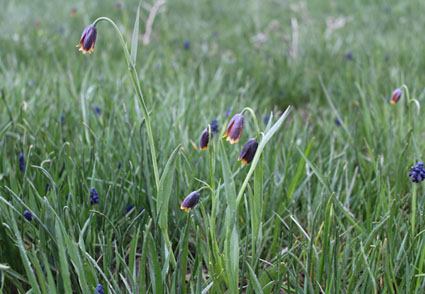
Fritillaria Linnaeus (1753: 303; Liliaceae) comprises about 170 species of geophytic perennials (Rix 2019) occurring in most temperate regions of the Northern Hemisphere (Tomović et al. 2007, Hill 2014, Day et al. 2014). The largest number of taxa has been found in Turkey (46 species) and Greece (31 taxa, 26 species and five subspecies).
References
Baker, J.G. (1874) Revision of the genera and species of Tulipeae. Journal of the Linnean Society Botany 14: 211–310. https://doi.org/10.1111/j.1095-8339.1874.tb00314.x
Boissier, E. (1846) Diagnoses plantarum Orientalium novarum 1 (7). Herrmann, Leipzig, Paris, pp. 104–107.
Day, P.D., Berger, M., Hill, L., Fay, M.F., Leitch, A.R., Leitch, I.J. & Kelly, L.J. (2014) Evolutionary relationships in the medicinally important genus Fritillaria L. (Liliaceae). Molecular Phylogenetics and Evolution 80: 11–19. https://doi.org/10.1016/j.ympev.2014.07.024
Hill, L. (2014) Fritillaria. A list of published names, v. 4.6. Available from: http://www.fritillariaicones.com/info/names/frit.names.pdf (accessed 17 April 2022)
IUCN Standards and Petitions Committee (2019) Guidelines for using the IUCN Red List categories and criteria, version 14. Prepared by the Standards and Petitions Committee. Available from: http://www.iucnredlist.org/documents/RedListGuidelines.pdf (accessed 17 April 2022)
Khaniki, G.B. (1997) Fritillaria chlororhabdota (Liliaceae), a new species from Iran. Herbertia 52: 140–152.
Linnaeus, C. (1753) Species plantarum 1. Salvius, Stockholm, 1200 pp. https.//doi.org/10.5962/bhl.title.37656
Linnaeus, C. (1756) Centauria II. Plantarum. Regia Academia, Uppsala, 34 pp. https://doi.org/10.5962/bhl.title.51985
Marschall von Bieberstein, F.A. (1808) Flora Taurico-Caucasica exhibens stirpes phaenogamas, in Chersoneso Taurica et regionibus caucasicis sponte crescents, vol. 1. Academicis, Kharkov, 478 pp.
Rix, E.M. (1975) Notes on Fritillaria (Liliaceae) in the eastern Mediterranean region. I & II. Kew Bulletin 29: 647–654. https://doi.org/10.2307/4108130
Rix, E.M. (2019) Fritillaria forbesii (Liliaceae). Curtis’s Botanical Magazine 36: 95–105. https://doi.org/10.1111/curt.12278
Salisbury, R.A. (1807) Observations on the genera of Trollius, Eranthis, Helleborus, Coptis and Isopyrum. Transactions of the Linnean Society of London 8: 300–307. https://doi.org/10.1111/j.1096-3642.1807.tb00315.x
Tenore, M. (1841) Tornate dell’ accademia delle science (Maggio, Giugno, Luglio e Agusto). Annali Civili del Regno delle due Sicilie 26: 42–54.
Thiers, B. (2022 [continuously updated]) Index Herbariorum: A global directory of public herbaria and associated staff. New York Botanical Garden’s Virtual Herbarium. Available from: http://sweetgum.nybg.org/ih/ (accessed 17 April 2022)
Tomovi?, G., Vukojic, S., Niketic, M., Zlatkovic, B. & Stevanovic, V. (2007) Fritillaria (Liliaceae) in Serbia: distribution, habitats, and some taxonomic notes. Phytologia Balcanica 13: 359–370.
Vvedensky, A.I. (1932) Gagea graminifolia In: Fedtschenko, B.A., Popov, M.G. & Shishkin, B.K. (Eds.) Flora of Turkmenistan, vol 1. Academy of Sciences of the USSR & Botanical Institute of the Turkmen SSR, Leningrad.
Boissier, E. (1846) Diagnoses plantarum Orientalium novarum 1 (7). Herrmann, Leipzig, Paris, pp. 104–107.
Day, P.D., Berger, M., Hill, L., Fay, M.F., Leitch, A.R., Leitch, I.J. & Kelly, L.J. (2014) Evolutionary relationships in the medicinally important genus Fritillaria L. (Liliaceae). Molecular Phylogenetics and Evolution 80: 11–19. https://doi.org/10.1016/j.ympev.2014.07.024
Hill, L. (2014) Fritillaria. A list of published names, v. 4.6. Available from: http://www.fritillariaicones.com/info/names/frit.names.pdf (accessed 17 April 2022)
IUCN Standards and Petitions Committee (2019) Guidelines for using the IUCN Red List categories and criteria, version 14. Prepared by the Standards and Petitions Committee. Available from: http://www.iucnredlist.org/documents/RedListGuidelines.pdf (accessed 17 April 2022)
Khaniki, G.B. (1997) Fritillaria chlororhabdota (Liliaceae), a new species from Iran. Herbertia 52: 140–152.
Linnaeus, C. (1753) Species plantarum 1. Salvius, Stockholm, 1200 pp. https.//doi.org/10.5962/bhl.title.37656
Linnaeus, C. (1756) Centauria II. Plantarum. Regia Academia, Uppsala, 34 pp. https://doi.org/10.5962/bhl.title.51985
Marschall von Bieberstein, F.A. (1808) Flora Taurico-Caucasica exhibens stirpes phaenogamas, in Chersoneso Taurica et regionibus caucasicis sponte crescents, vol. 1. Academicis, Kharkov, 478 pp.
Rix, E.M. (1975) Notes on Fritillaria (Liliaceae) in the eastern Mediterranean region. I & II. Kew Bulletin 29: 647–654. https://doi.org/10.2307/4108130
Rix, E.M. (2019) Fritillaria forbesii (Liliaceae). Curtis’s Botanical Magazine 36: 95–105. https://doi.org/10.1111/curt.12278
Salisbury, R.A. (1807) Observations on the genera of Trollius, Eranthis, Helleborus, Coptis and Isopyrum. Transactions of the Linnean Society of London 8: 300–307. https://doi.org/10.1111/j.1096-3642.1807.tb00315.x
Tenore, M. (1841) Tornate dell’ accademia delle science (Maggio, Giugno, Luglio e Agusto). Annali Civili del Regno delle due Sicilie 26: 42–54.
Thiers, B. (2022 [continuously updated]) Index Herbariorum: A global directory of public herbaria and associated staff. New York Botanical Garden’s Virtual Herbarium. Available from: http://sweetgum.nybg.org/ih/ (accessed 17 April 2022)
Tomovi?, G., Vukojic, S., Niketic, M., Zlatkovic, B. & Stevanovic, V. (2007) Fritillaria (Liliaceae) in Serbia: distribution, habitats, and some taxonomic notes. Phytologia Balcanica 13: 359–370.
Vvedensky, A.I. (1932) Gagea graminifolia In: Fedtschenko, B.A., Popov, M.G. & Shishkin, B.K. (Eds.) Flora of Turkmenistan, vol 1. Academy of Sciences of the USSR & Botanical Institute of the Turkmen SSR, Leningrad.