
Abstract
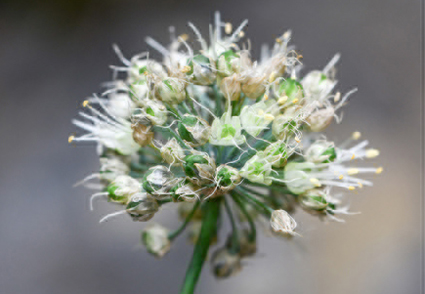
A new species, Allium tsinlingense, from southern Shaanxi Province, China, is described and illustrated here. This species is similar to A. maowenense in Allium sect. Daghestanica, but it can be distinguished by its leaves solid, its spathe persistent after flowering, its flowers changing color from green, greenish to white in different stage, but never purplish, with the midvein of tepal greenish and never pale red, and its pedicels with bracteoles at base. Molecular phylogenetic analyses also suggested that this new species is a member of Allium sect. Daghestanica and a sister taxon to A. maowenense.
References
Blattner, F.R. (1999) Direct amplification of the entire ITS region from poorly preserved plant material using recombinant PCR. BioTechniques 27: 1180–1186. https://doi.org/10.2144/99276st04
Block, E. (2010) Garlic and other Alliums. The lore and the science. Royal Society of Chemistry, Cambridge, 454 pp.
Darriba, D., Taboada, G.L., Doallo, R. & Posada, D. (2012) jModelTest 2: more models, new heuristics and parallel computing. Nature Methods 9: 772. https://doi.org/10.1038/nmeth.2109
Edgar, R.C. (2004) MUSCLE: multiple sequence alignment with high accuracy and high throughput. Nucleic Acids Research 32 (5): 1792–1797. https://doi.org/10.1093/nar/gkh340
Friesen, N., Abbasi, M., Murtazaliev, R. & Fritsch, R.M. (2020) Allium matinae–a new species from northwestern Iran. Phytotaxa 433 (3): 181–189. https://doi.org/10.11646/phytotaxa.433.3.1
Friesen, N., Fritsch, R.M. & Blattner, F.R. (2006) Phylogeny and intrageneric classification of Allium (Alliaceae) based on nuclear ribosomal DNA ITS sequences. Aliso 22: 372–395. https://doi.org/10.5642/aliso.20062201.31
Fritsch, R.M. & Friesen, N. (2002) Evolution, domestication and taxonomy. In: Rabinowitch, H.D. & Currah, L. (Eds.) Allium crop science: recent advances. CABI Publishing, Wallingford, pp. 5–30. https://doi.org/10.1079/9780851995106.0005
Fu, L.F., Liao, R., Lan, D.Q., Wen, F. & Liu, H. (2020) A new species of Chrysosplenium (Saxifragaceae) from Shaanxi, northwestern China. PhytoKeys 159 (9): 127–135. https://doi.org/10.3897/phytokeys.159.56109
Guo, M., Zhai, J.W., Wu, X.Y., Li, S.X., Wang, M., Li, Z.J. & Chen, L.J. (2017) Calanthe taibaishanensis, A New Orchid Species from China: Evidence from Morphological and Molecular Analyses. Phytotaxa 327 (2): 184–190. https://doi.org/10.11646/phytotaxa.327.2.7
Herden, T., Hanelt, P. & Friesen, N. (2016) Phylogeny of Allium L. subgenus Anguinum (G.Don. ex W.D.J.Koch) N.Friesen (Amaryllidaceae). Molecular Phylogenetics and Evolution 95: 79–93. https://doi.org/10.1016/j.ympev.2015.11.004
Kearse, M., Moir, R., Wilson, A., Stones-Havas, S., Cheung, M., Sturrock, S., Buxton, S., Cooper, A., Markowitz, S., Duran, C., Thierer, T., Ashton, B., Meintjes, P. & Drummond, A. (2012) Geneious basic: an integrated and extendable desktop software platform for the organization and analysis of sequence data. Bioinformatics 28: 1647–1649. https://doi.org/10.1093/bioinformatics/bts199
Lei, X.J., Li, Y.L., Li, Q., Wang, J. & Chen, W.D. (2016) The characteristics and causes of the snow cover variation in the Taibai Mountains during 1962-2014. Journal of Glaciology and Geocryology 38 (5): 1201–1210. https://doi.org/10.7522 /j.issn.1000-0240.2016.0140
Li, M.J., Yu, H.X., Guo, X.L. & He, X.J. (2021) Out of the Qinghai–Tibetan Plateau and rapid radiation across Eurasia for Allium section Daghestanica (Amaryllidaceae). AoB PLANTS 13 (3): 1–14. https://doi.org/10.1093/aobpla/plab017
Li, Q.Q., Zhou, S.D., He, X.J., Yu, Y., Zhang, Y.C. & Wei, X.Q. (2010) Phylogeny and biogeography of Allium (Amaryllidaceae: Allieae) based on nuclear ribosomal internal transcribed spacer and chloroplast rps16 sequences, focusing on the inclusion of species endemic to China. Annals of Botany 106: 709–733. https://doi.org/10.1093/aob/mcq177
Li, S.F. & Li, B. (2013) Flora Tsinlingensis (Supplementum). Sermatophyte. Science Press, Beijing, 419 pp.
Li, S.F., Wang, Y.C. & Li, B. (2014) Characteristics of the Seed Plants Flora in Qinling Mountains and Its Relationship with Floras in Other Mountains. Acta Botanica Boreali-Occidentalla Sinica 34 (11): 2346–2353. https://doi.org/10.7606/j.issn.1000-4025.2014.11.2346
Linnaeus, C. (1753) Species Plantarum, vol. 1. Laurentius Salvius, Holmiae, 560 pp.
Nguyen, N.H., Driscoll, H.E. & Specht, C.D. (2008) A molecular phylogeny of the wild onions (Allium; Alliaceae) with a focus on the western north American center of diversity. Molecular Phylogenetics and Evolution 47 (3): 1157–1172. https://doi.org/10.1016/j.ympev.2007.12.006
Redouté, P.J. (1804) Les Liliacées, vol. 2. Chez l’auteur, Imprimerie De Didot Jeune, Paris.
Regel, E. (1875) Alliorum adhuc cognitorum monographia. Acta Horti Petropolitani 3: 1–266.
Regel, E. (1887) Allii species Asiae Centralis in Asia Media a Turcomania desertisque Araliensibus et Caspicis usque ad Mongolian crescentes. Acta Horti Petropolitani 10: 278–362.
Ronquist, F. & Huelsenbeck, J.P. (2003) MrBayes 3: Bayesian phylogenetic inference under mixed models. Bioinformatics 19 (12): 1572–1574. https://doi.org/10.1093/bioinformatics/btg180
Ronquist, F., Teslenko, M., van der Mark, P., Ayres, D.L., Darling, A., Höhna, S., Larget, B., Liu, L., Suchard, M.A. & Huelsenbeck, J.P. (2012) MrBayes 3.2: efficient Bayesian phylogenetic inference and model choice across a large model space. Systematic Biology 61 (3): 539–542. https://doi.org/10.1093/sysbio/sys029
Shaw, J., Lickey, E.B., Schilling, E.E. & Small, R.L. (2007) Comparison of whole chloroplast genome sequences to choose noncoding regions for phylogenetic studies in angiosperms: The tortoise and the hare III. American Journal of Botany 94 (3): 275–288. https://doi.org/10.3732/ajb.94.3.275
Stamatakis, A. (2014) RAxML version 8: a tool for phylogenetic analysis and post-analysis of large phylogenies. Bioinformatics 30 (9): 1312–1313. https://doi.org/10.1093/bioinformatics/btu033
Swofford, D.L. (2002) PAUP*: phylogenetic analysis using parsimony (*and other methods) Version 4. Sinauer Associates, Sunderland. https://doi.org/10.1111/j.0014-3820.2002.tb00191.x
Taberlet, P., Gielly, L., Pautou, G. & Bouvet, J. (1991) Universal primers for amplification of three non-coding regions of chloroplast DNA. Plant Molecular Biology 17: 1105–1109. https://doi.org/10.1007/BF00037152
Tscholokaschvili, N. (1965) De Sectione Rhiziridium don Generis Allium L. Series Nova Daghestanica Tscholokaschvili. Notulae Systematicae ac Geographicae Instituti Botanici Thbilissiensis 25: 83–102.
Xie, D.F., Tan, J.B., Yu, Y., Gui, L.J., Su, D.M., Zhou, S.D. & He, X.J. (2020a) Insights into phylogeny, age and evolution of Allium (Amaryllidaceae) based on the whole plastome sequences. Annals of Botany 125 (7): 1039–1055. https://doi.org/10.1093/aob/mcaa024
Xie, D.F., Xie, F.M., Jia, S.B., Li, H., Yang, X., Zhang, X.Y., Zhou, S.D. & He, X.J. (2020b) Allium xinlongense (Amaryllidaceae, Allioideae), a new species from western Sichuan. Phytotaxa 432 (3): 274–282. https://doi.org/10.11646/phytotaxa.432.3.4
Xie, D.F., Yu, H.X., Price, M., Xie, C., Deng, Y.Q., Chen, J.P., Yu, Y., Zhou, S.D. & He, X.J. (2019) Phylogeny of Chinense Allium Species in Section Daghestanica and Adaptive Evolution of Allium (Amaryllidaceae, Allioideae) Species Revealed by the Chloroplast Complete Genome. Frontiers in Plant Science 10: 460. https://doi.org/10.3389/fpls.2019.00460
Xu, J.M. (1987) Allium L. In: Wang, F.-T. & Tang, T. (Eds.) Flora Reipublicae Popularis Sinicae, vol. 14. Science Press, Beijing, pp. 170–272.
Xu, J.M., Xue, P.F, Zhu, S.M. & Jing, W.C. (1994) A new species of Allium L. from Sichuan and its karyotype. Acta Phytotaxonomica Sinica 32 (4): 356–358.
Yu, H.X., Guo, X.L., Zhou, S.D. & He, X.J. (2018) Pollen and Seed Micro-morphology Comparison and Taxonomic Significance of the Chinese Allium Sect. Daghestanica. Acta Botanica Boreali-Occidentalla Sinica 38 (1): 61–67. https://doi.org/10.7606/j.issn.1000-4025.2018.01.0061
Block, E. (2010) Garlic and other Alliums. The lore and the science. Royal Society of Chemistry, Cambridge, 454 pp.
Darriba, D., Taboada, G.L., Doallo, R. & Posada, D. (2012) jModelTest 2: more models, new heuristics and parallel computing. Nature Methods 9: 772. https://doi.org/10.1038/nmeth.2109
Edgar, R.C. (2004) MUSCLE: multiple sequence alignment with high accuracy and high throughput. Nucleic Acids Research 32 (5): 1792–1797. https://doi.org/10.1093/nar/gkh340
Friesen, N., Abbasi, M., Murtazaliev, R. & Fritsch, R.M. (2020) Allium matinae–a new species from northwestern Iran. Phytotaxa 433 (3): 181–189. https://doi.org/10.11646/phytotaxa.433.3.1
Friesen, N., Fritsch, R.M. & Blattner, F.R. (2006) Phylogeny and intrageneric classification of Allium (Alliaceae) based on nuclear ribosomal DNA ITS sequences. Aliso 22: 372–395. https://doi.org/10.5642/aliso.20062201.31
Fritsch, R.M. & Friesen, N. (2002) Evolution, domestication and taxonomy. In: Rabinowitch, H.D. & Currah, L. (Eds.) Allium crop science: recent advances. CABI Publishing, Wallingford, pp. 5–30. https://doi.org/10.1079/9780851995106.0005
Fu, L.F., Liao, R., Lan, D.Q., Wen, F. & Liu, H. (2020) A new species of Chrysosplenium (Saxifragaceae) from Shaanxi, northwestern China. PhytoKeys 159 (9): 127–135. https://doi.org/10.3897/phytokeys.159.56109
Guo, M., Zhai, J.W., Wu, X.Y., Li, S.X., Wang, M., Li, Z.J. & Chen, L.J. (2017) Calanthe taibaishanensis, A New Orchid Species from China: Evidence from Morphological and Molecular Analyses. Phytotaxa 327 (2): 184–190. https://doi.org/10.11646/phytotaxa.327.2.7
Herden, T., Hanelt, P. & Friesen, N. (2016) Phylogeny of Allium L. subgenus Anguinum (G.Don. ex W.D.J.Koch) N.Friesen (Amaryllidaceae). Molecular Phylogenetics and Evolution 95: 79–93. https://doi.org/10.1016/j.ympev.2015.11.004
Kearse, M., Moir, R., Wilson, A., Stones-Havas, S., Cheung, M., Sturrock, S., Buxton, S., Cooper, A., Markowitz, S., Duran, C., Thierer, T., Ashton, B., Meintjes, P. & Drummond, A. (2012) Geneious basic: an integrated and extendable desktop software platform for the organization and analysis of sequence data. Bioinformatics 28: 1647–1649. https://doi.org/10.1093/bioinformatics/bts199
Lei, X.J., Li, Y.L., Li, Q., Wang, J. & Chen, W.D. (2016) The characteristics and causes of the snow cover variation in the Taibai Mountains during 1962-2014. Journal of Glaciology and Geocryology 38 (5): 1201–1210. https://doi.org/10.7522 /j.issn.1000-0240.2016.0140
Li, M.J., Yu, H.X., Guo, X.L. & He, X.J. (2021) Out of the Qinghai–Tibetan Plateau and rapid radiation across Eurasia for Allium section Daghestanica (Amaryllidaceae). AoB PLANTS 13 (3): 1–14. https://doi.org/10.1093/aobpla/plab017
Li, Q.Q., Zhou, S.D., He, X.J., Yu, Y., Zhang, Y.C. & Wei, X.Q. (2010) Phylogeny and biogeography of Allium (Amaryllidaceae: Allieae) based on nuclear ribosomal internal transcribed spacer and chloroplast rps16 sequences, focusing on the inclusion of species endemic to China. Annals of Botany 106: 709–733. https://doi.org/10.1093/aob/mcq177
Li, S.F. & Li, B. (2013) Flora Tsinlingensis (Supplementum). Sermatophyte. Science Press, Beijing, 419 pp.
Li, S.F., Wang, Y.C. & Li, B. (2014) Characteristics of the Seed Plants Flora in Qinling Mountains and Its Relationship with Floras in Other Mountains. Acta Botanica Boreali-Occidentalla Sinica 34 (11): 2346–2353. https://doi.org/10.7606/j.issn.1000-4025.2014.11.2346
Linnaeus, C. (1753) Species Plantarum, vol. 1. Laurentius Salvius, Holmiae, 560 pp.
Nguyen, N.H., Driscoll, H.E. & Specht, C.D. (2008) A molecular phylogeny of the wild onions (Allium; Alliaceae) with a focus on the western north American center of diversity. Molecular Phylogenetics and Evolution 47 (3): 1157–1172. https://doi.org/10.1016/j.ympev.2007.12.006
Redouté, P.J. (1804) Les Liliacées, vol. 2. Chez l’auteur, Imprimerie De Didot Jeune, Paris.
Regel, E. (1875) Alliorum adhuc cognitorum monographia. Acta Horti Petropolitani 3: 1–266.
Regel, E. (1887) Allii species Asiae Centralis in Asia Media a Turcomania desertisque Araliensibus et Caspicis usque ad Mongolian crescentes. Acta Horti Petropolitani 10: 278–362.
Ronquist, F. & Huelsenbeck, J.P. (2003) MrBayes 3: Bayesian phylogenetic inference under mixed models. Bioinformatics 19 (12): 1572–1574. https://doi.org/10.1093/bioinformatics/btg180
Ronquist, F., Teslenko, M., van der Mark, P., Ayres, D.L., Darling, A., Höhna, S., Larget, B., Liu, L., Suchard, M.A. & Huelsenbeck, J.P. (2012) MrBayes 3.2: efficient Bayesian phylogenetic inference and model choice across a large model space. Systematic Biology 61 (3): 539–542. https://doi.org/10.1093/sysbio/sys029
Shaw, J., Lickey, E.B., Schilling, E.E. & Small, R.L. (2007) Comparison of whole chloroplast genome sequences to choose noncoding regions for phylogenetic studies in angiosperms: The tortoise and the hare III. American Journal of Botany 94 (3): 275–288. https://doi.org/10.3732/ajb.94.3.275
Stamatakis, A. (2014) RAxML version 8: a tool for phylogenetic analysis and post-analysis of large phylogenies. Bioinformatics 30 (9): 1312–1313. https://doi.org/10.1093/bioinformatics/btu033
Swofford, D.L. (2002) PAUP*: phylogenetic analysis using parsimony (*and other methods) Version 4. Sinauer Associates, Sunderland. https://doi.org/10.1111/j.0014-3820.2002.tb00191.x
Taberlet, P., Gielly, L., Pautou, G. & Bouvet, J. (1991) Universal primers for amplification of three non-coding regions of chloroplast DNA. Plant Molecular Biology 17: 1105–1109. https://doi.org/10.1007/BF00037152
Tscholokaschvili, N. (1965) De Sectione Rhiziridium don Generis Allium L. Series Nova Daghestanica Tscholokaschvili. Notulae Systematicae ac Geographicae Instituti Botanici Thbilissiensis 25: 83–102.
Xie, D.F., Tan, J.B., Yu, Y., Gui, L.J., Su, D.M., Zhou, S.D. & He, X.J. (2020a) Insights into phylogeny, age and evolution of Allium (Amaryllidaceae) based on the whole plastome sequences. Annals of Botany 125 (7): 1039–1055. https://doi.org/10.1093/aob/mcaa024
Xie, D.F., Xie, F.M., Jia, S.B., Li, H., Yang, X., Zhang, X.Y., Zhou, S.D. & He, X.J. (2020b) Allium xinlongense (Amaryllidaceae, Allioideae), a new species from western Sichuan. Phytotaxa 432 (3): 274–282. https://doi.org/10.11646/phytotaxa.432.3.4
Xie, D.F., Yu, H.X., Price, M., Xie, C., Deng, Y.Q., Chen, J.P., Yu, Y., Zhou, S.D. & He, X.J. (2019) Phylogeny of Chinense Allium Species in Section Daghestanica and Adaptive Evolution of Allium (Amaryllidaceae, Allioideae) Species Revealed by the Chloroplast Complete Genome. Frontiers in Plant Science 10: 460. https://doi.org/10.3389/fpls.2019.00460
Xu, J.M. (1987) Allium L. In: Wang, F.-T. & Tang, T. (Eds.) Flora Reipublicae Popularis Sinicae, vol. 14. Science Press, Beijing, pp. 170–272.
Xu, J.M., Xue, P.F, Zhu, S.M. & Jing, W.C. (1994) A new species of Allium L. from Sichuan and its karyotype. Acta Phytotaxonomica Sinica 32 (4): 356–358.
Yu, H.X., Guo, X.L., Zhou, S.D. & He, X.J. (2018) Pollen and Seed Micro-morphology Comparison and Taxonomic Significance of the Chinese Allium Sect. Daghestanica. Acta Botanica Boreali-Occidentalla Sinica 38 (1): 61–67. https://doi.org/10.7606/j.issn.1000-4025.2018.01.0061