

Abstract
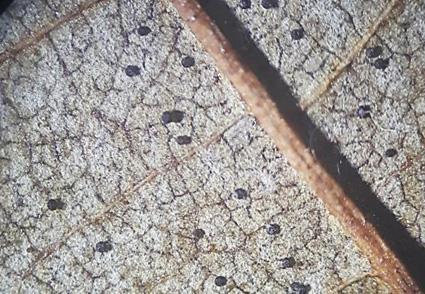
A powdery mildew fungus of the genus Phyllactinia was found on leaves of Juglans regia in Pakistan. This species is well characterized by having large-sized chasmothecia, rather short appendages and small ascospores. Sequences retrieved from this species formed a separate clade distant from the clade constituted by Phyllactinia juglandis, a common species on different hosts of the Juglandaceae in Asia. On account of biological and morphological differences from phylogenetically related species, the new species is described and illustrated as Phyllactinia himalayensis sp. nov.
References
Afshan, N.S., Zafar, I. & Khalid, A.N. (2021) Checklist of powdery mildew fungi (Erysiphaceae) in Pakistan. Mycotaxon 136 (3): 689–689. https://doi.org/10.5248/136.689
Amano, K. (1986) Host range and geographical distribution of the powdery mildew fungi. Japan Scientific Societies Press, Tokyo, 741 pp.
Awan, A.A., Akhtar, T. & Dar, M.E.U.I. (2007) Fodder plants of some selected areas of Jhelum Valley. Pakistan Journal of Biological Sciences 10 (9): 1547–1549. https://doi.org/10.3923/pjbs.2007.1547.1549
Braun, U. & Cook, R.T.A. (2012) Taxonomic manual of the Erysiphales (powdery mildews) CBS Biodiversity Series 11. CBS-KNAW Fungal Biodiversity Centre, Utrecht, 707 pp.
Braun, U. & Takamatsu, S. (2000) Phylogeny of Erysiphe, Microsphaera, Uncinula (Erysipheae) and Cystotheca, Podosphaera, Sphaerotheca (Cystotheceae) inferred from rDNA ITS sequences: some taxonomic consequences. Schlechtendalia 4: 1–33.
Braun, U., Cook, R.T.A., Inman, A.J. & Shin, H.D. (2002) The taxonomy of the powdery mildew fungi. The powdery mildews: a comprehensive treatise, 13–55.
Cunnington, J.H., Takamatsu, S., Lawrie, A.C. & Pascoe, I.G. (2003) Molecular identification of anamorphic powdery mildews (Erysiphales). Australasian Plant Pathology 32 (3): 421–428. https://doi.org/10.1071/AP03045
Dar, M.E.U.I., Cochard, R., Shreshta, R.P. & Ahmad, S. (2012) Plant resource utilization by local inhabitants around Machiara National Park, Azad Kashmir, Pakistan. Journal of Food, Agriculture & Environment 10 (3–4): 1139–1148. https://doi.org/10.1234/4.2012.3612
Hall, T.A. (1999) Bioedit: a user-friendly biological sequence alignment editor and analysis program, for windows 95/98/NT. Nucleic Acid Symposium Series (41): 95–98.
Jin, D.N., Kiss, L., Takamatsu, S., Zhang, Z.Y., Cabrera, M.G., Li, Z., Li, Y. & Liu, S.Y. (2021) Hidden diversity of powdery mildews belonging to the recently re-discovered genus Salmonomyces. Mycological Progress 20 (9): 1009–1018. https://doi.org/10.1007/s11557-021-01679-8
Khan, W., Hussain, M., Ali, K., Ali, M. & Nisar, M. (2020) Distribution and phenotypic variation in Juglans regia L. growing in Hindu Kush ranges of Pakistan. Acta Ecologica Sinica 40 (5): 363–372. https://doi.org/10.1016/j.chnaes.2020.02.009
Löytynoja, A. & Goldman, N. (2010) webPRANK: a phylogeny-aware multiple sequence aligner with interactive alignment browser. BMC Bioinformatics 11 (1): 1–7. https://doi.org/10.1186/1471-2105-11-579
Marmolejo, J., Siahaan, S.A.S., Takamatsu, S. & Braun, U. (2018) Three new records of powdery mildews found in Mexico with one genus and one new species proposed. Mycoscience 59: 1–7. https://doi.org/10.1016/j.myc.2017.06.010
Miller, M.A., Pfeiffer, W. & Schwartz, T. (2010) Creating the CIPRES Science Gateway for inference of large phylogenetic trees. Gateway Computing Environments Workshop (GCE), Institute of Electrical and Electronics Engineers, New Orleans, pp. 14 November 2010, New Orleans, LA, USA. 1–8. https://doi.org/10.1109/GCE.2010.5676129
Rambaut, A., Suchard, M.A., Xie, D. & Drummond, A.J. (2014) FigTree 1.4. 2 software. Edinburgh, Institute of Evolutionary Biology, University of Edinburgh.
Sambrook, J. & Russel, D.W. (2001) Rapid isolation of yeast DNA. In: Sambrook, J. & Russel, D.W. (Eds.) Molecular cloning: a laboratory manual. Cold Spring Harbor Laboratory Press, New York, pp. 631–632.
Stamatakis, A. (2014) RAxML version 8: a tool for phylogenetic analysis and post-analysis of large phylogenies. Bioinformatics 30 (9): 1312–1313. https://doi.org/10.1093/bioinformatics/btu033
Takamatsu, S., Limkaisang, S. & Braun, U. (2005) Phylogenetic relationships and generic affinity of Uncinula septata inferred from nuclear rDNA sequences. Mycoscience 46 (1): 9–16. https://doi.org/10.1007/S10267-004-0205-9
Takamatsu, S., Inagaki, M., Niinomi, S., Khodaparast, S.A., Shin, H.D., Grigaliunaite, B. & Havrylenko, M. (2008) Comprehensive molecular phylogenetic analysis and evolution of the genus Phyllactinia (Ascomycota: Erysiphales) and its allied genera. Mycological Research 112 (3): 299–315. https://doi.org/10.1016/j.mycres.2007.11.014
Takamatsu, S., Siahaan, S.A., Moreno-Rico, O., Cabrera de Alvarez, M.G. & Braun, U. (2016) Early evolution of endoparasitic group in powdery mildews: molecular phylogeny suggests missing link between Phyllactinia and Leveillula. Mycologia 108 (5): 837–850. https://doi.org/10.3852/16-010
Tao, J.F, Qin, J.Z. & Li, T.J. (1977) Two new species of Erysiphaceae. Acta Microbiologica Sinica 17 (4): 293–296.
Amano, K. (1986) Host range and geographical distribution of the powdery mildew fungi. Japan Scientific Societies Press, Tokyo, 741 pp.
Awan, A.A., Akhtar, T. & Dar, M.E.U.I. (2007) Fodder plants of some selected areas of Jhelum Valley. Pakistan Journal of Biological Sciences 10 (9): 1547–1549. https://doi.org/10.3923/pjbs.2007.1547.1549
Braun, U. & Cook, R.T.A. (2012) Taxonomic manual of the Erysiphales (powdery mildews) CBS Biodiversity Series 11. CBS-KNAW Fungal Biodiversity Centre, Utrecht, 707 pp.
Braun, U. & Takamatsu, S. (2000) Phylogeny of Erysiphe, Microsphaera, Uncinula (Erysipheae) and Cystotheca, Podosphaera, Sphaerotheca (Cystotheceae) inferred from rDNA ITS sequences: some taxonomic consequences. Schlechtendalia 4: 1–33.
Braun, U., Cook, R.T.A., Inman, A.J. & Shin, H.D. (2002) The taxonomy of the powdery mildew fungi. The powdery mildews: a comprehensive treatise, 13–55.
Cunnington, J.H., Takamatsu, S., Lawrie, A.C. & Pascoe, I.G. (2003) Molecular identification of anamorphic powdery mildews (Erysiphales). Australasian Plant Pathology 32 (3): 421–428. https://doi.org/10.1071/AP03045
Dar, M.E.U.I., Cochard, R., Shreshta, R.P. & Ahmad, S. (2012) Plant resource utilization by local inhabitants around Machiara National Park, Azad Kashmir, Pakistan. Journal of Food, Agriculture & Environment 10 (3–4): 1139–1148. https://doi.org/10.1234/4.2012.3612
Hall, T.A. (1999) Bioedit: a user-friendly biological sequence alignment editor and analysis program, for windows 95/98/NT. Nucleic Acid Symposium Series (41): 95–98.
Jin, D.N., Kiss, L., Takamatsu, S., Zhang, Z.Y., Cabrera, M.G., Li, Z., Li, Y. & Liu, S.Y. (2021) Hidden diversity of powdery mildews belonging to the recently re-discovered genus Salmonomyces. Mycological Progress 20 (9): 1009–1018. https://doi.org/10.1007/s11557-021-01679-8
Khan, W., Hussain, M., Ali, K., Ali, M. & Nisar, M. (2020) Distribution and phenotypic variation in Juglans regia L. growing in Hindu Kush ranges of Pakistan. Acta Ecologica Sinica 40 (5): 363–372. https://doi.org/10.1016/j.chnaes.2020.02.009
Löytynoja, A. & Goldman, N. (2010) webPRANK: a phylogeny-aware multiple sequence aligner with interactive alignment browser. BMC Bioinformatics 11 (1): 1–7. https://doi.org/10.1186/1471-2105-11-579
Marmolejo, J., Siahaan, S.A.S., Takamatsu, S. & Braun, U. (2018) Three new records of powdery mildews found in Mexico with one genus and one new species proposed. Mycoscience 59: 1–7. https://doi.org/10.1016/j.myc.2017.06.010
Miller, M.A., Pfeiffer, W. & Schwartz, T. (2010) Creating the CIPRES Science Gateway for inference of large phylogenetic trees. Gateway Computing Environments Workshop (GCE), Institute of Electrical and Electronics Engineers, New Orleans, pp. 14 November 2010, New Orleans, LA, USA. 1–8. https://doi.org/10.1109/GCE.2010.5676129
Rambaut, A., Suchard, M.A., Xie, D. & Drummond, A.J. (2014) FigTree 1.4. 2 software. Edinburgh, Institute of Evolutionary Biology, University of Edinburgh.
Sambrook, J. & Russel, D.W. (2001) Rapid isolation of yeast DNA. In: Sambrook, J. & Russel, D.W. (Eds.) Molecular cloning: a laboratory manual. Cold Spring Harbor Laboratory Press, New York, pp. 631–632.
Stamatakis, A. (2014) RAxML version 8: a tool for phylogenetic analysis and post-analysis of large phylogenies. Bioinformatics 30 (9): 1312–1313. https://doi.org/10.1093/bioinformatics/btu033
Takamatsu, S., Limkaisang, S. & Braun, U. (2005) Phylogenetic relationships and generic affinity of Uncinula septata inferred from nuclear rDNA sequences. Mycoscience 46 (1): 9–16. https://doi.org/10.1007/S10267-004-0205-9
Takamatsu, S., Inagaki, M., Niinomi, S., Khodaparast, S.A., Shin, H.D., Grigaliunaite, B. & Havrylenko, M. (2008) Comprehensive molecular phylogenetic analysis and evolution of the genus Phyllactinia (Ascomycota: Erysiphales) and its allied genera. Mycological Research 112 (3): 299–315. https://doi.org/10.1016/j.mycres.2007.11.014
Takamatsu, S., Siahaan, S.A., Moreno-Rico, O., Cabrera de Alvarez, M.G. & Braun, U. (2016) Early evolution of endoparasitic group in powdery mildews: molecular phylogeny suggests missing link between Phyllactinia and Leveillula. Mycologia 108 (5): 837–850. https://doi.org/10.3852/16-010
Tao, J.F, Qin, J.Z. & Li, T.J. (1977) Two new species of Erysiphaceae. Acta Microbiologica Sinica 17 (4): 293–296.