

Abstract
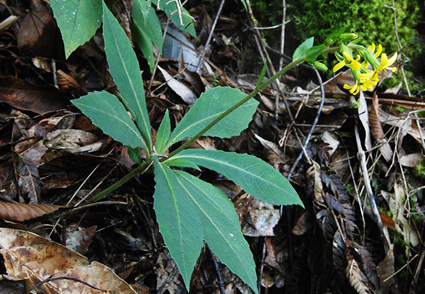
Careful examination of herbarium specimens and observation of living plants demonstrated that Synotis damiaoshanica is conspecific with S. guizhouensis and should be merged. Morphological differences of S. guizhouensis and its two most close allies, i.e. S. austroyunnanensis and S. sinica are discussed. Color plates of S. guizhouensis, S. damiaoshanica and S. austroyunnanensis are illustrated, a distribution map and a key to the three species are provided.
References
Candolle, A.P. de (1838) Prodromus Systematis Naturalis Regni Vegetabilis, vol. 6. Treuttel & Würts, Paris, 687 pp.
Chen, Y.L. (1999) Synotis (C. B. Clarke) C. Jeffrey & Y.L. Chen. In: Chen, Y.L. (Ed.) Flora Reipublicae Popularis Sinicae, vol. 77 (1). Science Press, Beijing, pp. 167–217.
Chen, Y.L. & Liu, D.J. (1989) Synotis (C. B. Clarke) C. Jeffrey & Y. L. Chen. In: Chen, Y.L. (Ed.) Flora Guizhouensis, vol. 9. Sichuan Ethnic Publishing House, Chengdu, pp. 266–267.
Chen, Y.L., Nordenstam, B. & Jeffrey, C. (2011) Synotis (C. B. Clarke) C. Jeffrey & Y.L. Chen. In: Wu, Z.Y & Raven, P.H. (Eds.) Flora of China, vols. 20–21. Science Press, Beijing & Missouri Botanical Garden Press, St. Louis, pp. 489–505.
Chang, C.C. (1936) Contributions to the knowledge of Chinese Compositae. Bulletin of the Fan Memorial Institute of Biology 7: 153–164.
Diels, L. (1901) Die Flora von Central-China: Nach der vorhandenen Literatur und neu mitgeteiltem Original-Materiale. Botanische Jahrbucher fur Systematik, Pflanzengeschichte und Pflanzengeographie 29 (5): 169–659.
Hu, S.Y. (1968) The Compositae of China (VIII). Quarterly Journal of the Taiwan Museum 21: 3–52.
Jeffrey, C. & Chen, Y.L. (1984) Taxonomic studies on the tribe Senecioneae (Compositae) of Eastern Asia. Kew Bulletin 39 (2): 205–446. https://doi.org/10.2307/4110124
Léveillé, H. (1914) Novae Gynurae sinenses. Bulletin de L’Académie Internationale de Géographie, Botanique 24: 283–284.
Li, H.M., Lazkov, G.A., Illarionova, I.D., Tong, T.J., Shao, Y.Y. & Ren, C. (2018) Transfer of Senecio karelinioides (Asteraceae-Senecioneae) to Synotis based on evidence from morphology, karyology and ITS/ETS sequence data. Nordic Journal of Botany 32: 1–12. https://doi.org/10.1111/njb.01838
Ruan, Y.Q., Liu, Y.L., Wu, X.H., Yu, F. & Tang, M. (2020) A newly recorded species and clarification of the distribution record of another species within Synotis in Yunnan. Journal of Gansu Agricultural University 55 (2): 112–123.
Sennikov, A.N., Nuraliev, M.S., Kuznetsov, A.N. & Kuznetsova, S.P. (2020) New national records of Asteraceae from Hoang Lien National Park, northern Vietnam. Wulfenia 27: 1–9.
Tang, M. (2014) A Systematic Study of the Genus Synotis (Compositae-Senecioneae). Ph.D. thesis. University of Chinese Academy of Sciences, Beijing.
Tang, M., Wang, L.Y. & Yang, Q.E. (2013) Synotis xinningensis (Asteraceae), a new species from Hunan, China. Botanical Studies 54: 16. https://doi.org/10.1186/1999-3110-54-16
Chen, Y.L. (1999) Synotis (C. B. Clarke) C. Jeffrey & Y.L. Chen. In: Chen, Y.L. (Ed.) Flora Reipublicae Popularis Sinicae, vol. 77 (1). Science Press, Beijing, pp. 167–217.
Chen, Y.L. & Liu, D.J. (1989) Synotis (C. B. Clarke) C. Jeffrey & Y. L. Chen. In: Chen, Y.L. (Ed.) Flora Guizhouensis, vol. 9. Sichuan Ethnic Publishing House, Chengdu, pp. 266–267.
Chen, Y.L., Nordenstam, B. & Jeffrey, C. (2011) Synotis (C. B. Clarke) C. Jeffrey & Y.L. Chen. In: Wu, Z.Y & Raven, P.H. (Eds.) Flora of China, vols. 20–21. Science Press, Beijing & Missouri Botanical Garden Press, St. Louis, pp. 489–505.
Chang, C.C. (1936) Contributions to the knowledge of Chinese Compositae. Bulletin of the Fan Memorial Institute of Biology 7: 153–164.
Diels, L. (1901) Die Flora von Central-China: Nach der vorhandenen Literatur und neu mitgeteiltem Original-Materiale. Botanische Jahrbucher fur Systematik, Pflanzengeschichte und Pflanzengeographie 29 (5): 169–659.
Hu, S.Y. (1968) The Compositae of China (VIII). Quarterly Journal of the Taiwan Museum 21: 3–52.
Jeffrey, C. & Chen, Y.L. (1984) Taxonomic studies on the tribe Senecioneae (Compositae) of Eastern Asia. Kew Bulletin 39 (2): 205–446. https://doi.org/10.2307/4110124
Léveillé, H. (1914) Novae Gynurae sinenses. Bulletin de L’Académie Internationale de Géographie, Botanique 24: 283–284.
Li, H.M., Lazkov, G.A., Illarionova, I.D., Tong, T.J., Shao, Y.Y. & Ren, C. (2018) Transfer of Senecio karelinioides (Asteraceae-Senecioneae) to Synotis based on evidence from morphology, karyology and ITS/ETS sequence data. Nordic Journal of Botany 32: 1–12. https://doi.org/10.1111/njb.01838
Ruan, Y.Q., Liu, Y.L., Wu, X.H., Yu, F. & Tang, M. (2020) A newly recorded species and clarification of the distribution record of another species within Synotis in Yunnan. Journal of Gansu Agricultural University 55 (2): 112–123.
Sennikov, A.N., Nuraliev, M.S., Kuznetsov, A.N. & Kuznetsova, S.P. (2020) New national records of Asteraceae from Hoang Lien National Park, northern Vietnam. Wulfenia 27: 1–9.
Tang, M. (2014) A Systematic Study of the Genus Synotis (Compositae-Senecioneae). Ph.D. thesis. University of Chinese Academy of Sciences, Beijing.
Tang, M., Wang, L.Y. & Yang, Q.E. (2013) Synotis xinningensis (Asteraceae), a new species from Hunan, China. Botanical Studies 54: 16. https://doi.org/10.1186/1999-3110-54-16