

Abstract
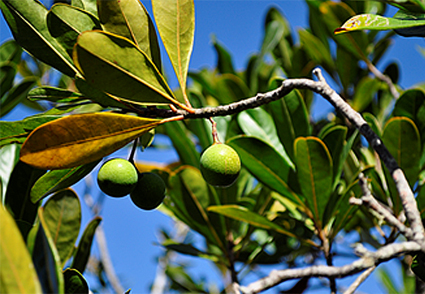
A new species, Mezilaurus conceicionensis (Lauraceae), from Southeastern Brazil, was discovered during fieldwork at Serra da Ferrugem, State of Minas Gerais. This new species is described and illustrated in this study, being distinguished from the remaining species of Mezilaurus species mostly by its globoid fruits. An identification key of the species of Mezilaurus from Southeastern Brazil is presented.
References
Allemão, F.F. (1847) Laurinea. Silvia dos Arsenaes (Gen. Nov.). Silvia (Gen. Nov.). Navalium (Sp. Nov.). Nome vulgar: Tapinhoan. Archivo Medico Brasileiro 3: 265–268.
Alves, F.M. & Souza, V.C. (2012) Two new species of Mezilaurus (Lauraceae) from Brazil. Brittonia 64: 257–262. https://doi.org/10.1007/s12228-011-9228-7
Alves, F.M. & Souza, V.C. (2013) Phylogenetic analysis of the Neotropical genus Mezilaurus and reestablishment of Clinostemon (Lauraceae). Taxon 62: 281–290. https://doi.org/10.12705/622.5
Alves, F.M., Souza, V.C. & Moraes, P.L.R. de (2011) Mezilaurus revolutifolia (Lauraceae), a new species from Brazilian Atlantic forest. Kew Bulletin 66: 505–509. https://doi.org/10.1007/s12225-011-9302-z
Assunção-Silva, C.C. & Assis, L.C.S. (2021) Areas of endemism of Lauraceae: new insights on the biogeographic regionalization of the Espinhaço Range, Brazil. Cladistics. [in press] https://doi.org/10.1111/cla.12481
Assunção-Silva, C.C., Bueno, M.L. & Assis, L.C.S. (2021) Centers of richness and endemism of Lauraceae in the Espinhaço Range, Brazil. Flora 285: 151943. https://doi.org/10.1016/j.flora.2021.151943
Aublet, J.B.C.F. (1775) Histoire des Plantes de la Guiane Françoise,.... Vol. 1. Pierre-François Didot jeune, London & Paris, 621 pp. [http://www.botanicus.org/title/b11962094]
Bachman, S., Moat, J., Hill, A.W., de la Torre, J. & Scott, B. (2011) Supporting Red List threat assessments with GeoCAT: geospatial conservation assessment tool. ZooKeys 150: 117–126. http://doi.org/10.3897/zookeys.150.2109
Chanderbali, A.S., van der Werff, H. & Renner, S.S. (2001) Phylogeny and historical biogeography of Lauraceae: evidence from the chloroplast and nuclear genomes. Annals of the Missouri Botanical Garden 88: 104–134. https://doi.org/10.2307/2666133
IUCN (2012) The IUCN Red List Categories and Criteria: version 3.1. Second edition. IUCN Red List Unit, Cambridge U.K. Available from: http://www.iucnredlist.org (accessed 10 May 2011).
IUCN (2016) Guidelines for using the IUCN red list categories and criteria. version 12. Prepared by the standards and petitions subcommittee. IUCN Species Survival Commission. IUCN, Gland, Switzerland and Cambridge, UK. [http://www.iucnredlist.org/documents/RedListGuidelines.pdf]
Kostermans, A.J.G.H. (1938) An interesting new American genus of the Lauraceae. Chronica Botanica 4: 14.
Kostermans, A.J.G.H. (1957) Lauraceae. Reinwardtia 4: 193–256. https://doi.org/10.14203/reinwardtia.v4i2.1003
Kubitzki, K. & Renner, S. (1982) Lauraceae I (Aniba and Aiouea). Flora Neotropica Monograph 31: 1–125. [https://www.jstor.org/stable/i400090]
Kubitzki, K. & Richter, H.G. (1987) Williamodendron Kubitzki & Richter, a new genus of Neotropical Lauraceae. Botanische Jahrbücher für Systematik, Pflanzengeschichte und Pflanzengeographie 109: 49–58.
Kuhlmann, J.G. & Sampaio, A.J. (1928) Clinostemon, Kuhlm et A. Samp. n. gen. de Lauraceas da Amazonia. Boletim do Museu Nacional de Rio de Janeiro 4: 57–59.
Kurz, H. (2000) Revision der Gattung Licaria (Lauraceae). Mitteilungen aus dem Institut für Allgemeine Botanik in Hamburg 28/29: 89–221.
Meissner, C.F. (1864) Lauraceae. In: Candolle, A.L.P.P. de (Ed.) Prodromus Systematis Naturalis Regni Vegetabilis, vol. 15, p. 1. Sumptibus Victoris Masson et filii, Paris, pp. 1–260. https://doi.org/10.5962/bhl.title.286
Mez, C. (1889) Lauraceae americanae monographice descripsit. Jahrbuch des Königlichen Botanischen Gartens und des Botanischen Museums zu Berlin 5: 1–556. [https://www.biodiversitylibrary.org/item/52601]
Mez, C. (1892) Spicilegium Laureanum. Arbeiten aus dem Königl. Botanischen Garten zu Breslau 1: 71–166.
Moraes, P.L.R., Vergne, M.C. & van der Werff, H. (2017) Three new species of Lauraceae from the Atlantic rainforest of Brazil. Phytotaxa 316: 149–160. https://doi.org/10.11646/phytotaxa.316.2.4
Mota, N.F.O., Silva, L.V.C., Martins, F.D. & Viana, P.L. (2015) Vegetação sobre Sistemas Ferruginosos da Serra dos Carajás. In: Carmo, F.F. & Kamino, L.H.Y. (Orgs.) Geossistemas Ferruginosos no Brasil. Instituto Prístino, Belo Horizonte, pp. 289–315.
Nunes, C.S., Bastos, M.N.C. & Gil, A.S.B (2016) Flora das cangas da Serra dos Carajás, Pará, Brasil: Cyperaceae. Rodriguésia 67: 1329–1366. https://doi.org/10.1590/2175-7860201667532
Richter, H.G. (1981) Anatomie des sekundären Xylems und der Rinde der Lauraceae. Sonderbände des Naturwissenschaftlichen Vereins zu Hamburg 5. Paul Parey, Hamburg. 148 pp.
Rizzini, C.T. (1979) Tratado de Fitogeografia do Brasil: Aspectos Sociológicos e Florísticos. Vol. 2. HUCITEC/EDUSP, São Paulo. 374 pp.
Rohwer, J.G. (1993) Lauraceae. In: Kubitzki, K., Rohwer, J.G. & Bittrich, V. (Eds.) The Families and Genera of Vascular Plants. Volume II. Flowering Plants—Dicotyledons. Magnoliid, Hamamelid and Caryophyllid Families. Springer-Verlag, Berlin, pp. 366–391. [https://www.springer.com/gp/book/9783540555094]
Rohwer, J.G. & Rudolph, B. (2005) Jumping genera: The phylogenetic positions of Cassytha, Hypodaphnis and Neocinnamomum (Lauraceae) based on different analyses of trnK intron sequences. Annals of the Missouri Botanical Garden 92: 153–178. [https://www.jstor.org/stable/3298512]
Rohwer, J.G., Richter, H.G. & van der Werff, H. (1991) Two new genera of Neotropical Lauraceae and critical remarks on the generic delimitation. Annals of the Missouri Botanical Garden 78: 388–400. https://doi.org/10.2307/2399568
Schettini, A.T., Leite, M.G.P., Messias, M.C.T.B., Gauthier, A., Li, H. & Kozovits, A.R. (2018) Exploring Al, Mn and Fe phytoextraction in 27 ferruginous rocky outcrops plant species. Flora 238: 175–182. https://doi.org/10.1016/j.flora.2017.05.004
Takahasi, A. & Meirelles, S.T. (2014) Ecologia da vegetação herbácea de bancadas lateríticas (cangas) em Corumbá, MS, Brasil. Hoehnea 41: 515–528. http://dx.doi.org/10.1590/2236-8906-63/2013
Taubert, P.H.W. (1892) Kuntze, O., Revisio generum plantarum vascularium omnium atque cellularium multarum secundum leges nomenclaturae internationales cum enumeratione plantarum exoticarum in itinere mundi collectarum... Botanisches Centralblatt 50: 17–24. [https://www.biodiversitylibrary.org/item/18607]
Thiers, B. (2021) Index Herbariorum: A Global Directory of Public Herbaria and Associated Staff. New York Botanical Garden’s Virtual Herbarium. Available from: http://sweetgum.nybg.org/science/ih/ (accessed 28 March 2021).
Vandelli, D. (1788) Florae Lusitanicae et Brasiliensis specimen... Typographia Academico-Regia, Coimbra, 96 pp. https://dx.doi.org/10.5962/bhl.title.51092
van der Werff, H. (1987) A revision of Mezilaurus (Lauraceae). Annals of the Missouri Botanical Garden 74: 153–182. https://doi.org/10.2307/2399274
van der Werff, H. (1991) A key to the genera of Lauraceae in the New World. Annals of the Missouri Botanical Garden 78: 377–387. https://doi.org/10.2307/2399567
van der Werff, H. (1997) Sextonia, a new genus of Lauraceae from South America. Novon 7: 436–439. https://doi.org/10.2307/3391778
van der Werff, H. & Nishida, S. (2010) Yasunia (Lauraceae), a new genus with two species from Ecuador and Peru. Novon 20: 493–502. https://doi.org/10.3417/2010030
Viana, P.L., Mota, N.F.O., Gil, A.S.B., Salino, A., Zappi, D.C., Harley, R.M., Ilkiu-Borges, A.L., Secco, R.S., Almeida, T.E., Watanabe, M.T.C., Santos, J.U.M., Trovó, M., Maurity, C. & Giulietti, A.M. (2016) Flora of the cangas of the Serra dos Carajás, Pará, Brazil: history study area and methodology. Rodriguésia 67: 1107–1124. https://doi.org/10.1590/2175-7860201667501
Zappi, D.C., Moro, M.F., Meagher, T.R. & Nic-Lughadha, E. (2017) Plant biodiversity drivers in Brazilian campos rupestres: Insights from phylogenetic structure. Frontiers in Plant Science 8: 2141. https://doi.org/10.3389/fpls.2017.02141
Alves, F.M. & Souza, V.C. (2012) Two new species of Mezilaurus (Lauraceae) from Brazil. Brittonia 64: 257–262. https://doi.org/10.1007/s12228-011-9228-7
Alves, F.M. & Souza, V.C. (2013) Phylogenetic analysis of the Neotropical genus Mezilaurus and reestablishment of Clinostemon (Lauraceae). Taxon 62: 281–290. https://doi.org/10.12705/622.5
Alves, F.M., Souza, V.C. & Moraes, P.L.R. de (2011) Mezilaurus revolutifolia (Lauraceae), a new species from Brazilian Atlantic forest. Kew Bulletin 66: 505–509. https://doi.org/10.1007/s12225-011-9302-z
Assunção-Silva, C.C. & Assis, L.C.S. (2021) Areas of endemism of Lauraceae: new insights on the biogeographic regionalization of the Espinhaço Range, Brazil. Cladistics. [in press] https://doi.org/10.1111/cla.12481
Assunção-Silva, C.C., Bueno, M.L. & Assis, L.C.S. (2021) Centers of richness and endemism of Lauraceae in the Espinhaço Range, Brazil. Flora 285: 151943. https://doi.org/10.1016/j.flora.2021.151943
Aublet, J.B.C.F. (1775) Histoire des Plantes de la Guiane Françoise,.... Vol. 1. Pierre-François Didot jeune, London & Paris, 621 pp. [http://www.botanicus.org/title/b11962094]
Bachman, S., Moat, J., Hill, A.W., de la Torre, J. & Scott, B. (2011) Supporting Red List threat assessments with GeoCAT: geospatial conservation assessment tool. ZooKeys 150: 117–126. http://doi.org/10.3897/zookeys.150.2109
Chanderbali, A.S., van der Werff, H. & Renner, S.S. (2001) Phylogeny and historical biogeography of Lauraceae: evidence from the chloroplast and nuclear genomes. Annals of the Missouri Botanical Garden 88: 104–134. https://doi.org/10.2307/2666133
IUCN (2012) The IUCN Red List Categories and Criteria: version 3.1. Second edition. IUCN Red List Unit, Cambridge U.K. Available from: http://www.iucnredlist.org (accessed 10 May 2011).
IUCN (2016) Guidelines for using the IUCN red list categories and criteria. version 12. Prepared by the standards and petitions subcommittee. IUCN Species Survival Commission. IUCN, Gland, Switzerland and Cambridge, UK. [http://www.iucnredlist.org/documents/RedListGuidelines.pdf]
Kostermans, A.J.G.H. (1938) An interesting new American genus of the Lauraceae. Chronica Botanica 4: 14.
Kostermans, A.J.G.H. (1957) Lauraceae. Reinwardtia 4: 193–256. https://doi.org/10.14203/reinwardtia.v4i2.1003
Kubitzki, K. & Renner, S. (1982) Lauraceae I (Aniba and Aiouea). Flora Neotropica Monograph 31: 1–125. [https://www.jstor.org/stable/i400090]
Kubitzki, K. & Richter, H.G. (1987) Williamodendron Kubitzki & Richter, a new genus of Neotropical Lauraceae. Botanische Jahrbücher für Systematik, Pflanzengeschichte und Pflanzengeographie 109: 49–58.
Kuhlmann, J.G. & Sampaio, A.J. (1928) Clinostemon, Kuhlm et A. Samp. n. gen. de Lauraceas da Amazonia. Boletim do Museu Nacional de Rio de Janeiro 4: 57–59.
Kurz, H. (2000) Revision der Gattung Licaria (Lauraceae). Mitteilungen aus dem Institut für Allgemeine Botanik in Hamburg 28/29: 89–221.
Meissner, C.F. (1864) Lauraceae. In: Candolle, A.L.P.P. de (Ed.) Prodromus Systematis Naturalis Regni Vegetabilis, vol. 15, p. 1. Sumptibus Victoris Masson et filii, Paris, pp. 1–260. https://doi.org/10.5962/bhl.title.286
Mez, C. (1889) Lauraceae americanae monographice descripsit. Jahrbuch des Königlichen Botanischen Gartens und des Botanischen Museums zu Berlin 5: 1–556. [https://www.biodiversitylibrary.org/item/52601]
Mez, C. (1892) Spicilegium Laureanum. Arbeiten aus dem Königl. Botanischen Garten zu Breslau 1: 71–166.
Moraes, P.L.R., Vergne, M.C. & van der Werff, H. (2017) Three new species of Lauraceae from the Atlantic rainforest of Brazil. Phytotaxa 316: 149–160. https://doi.org/10.11646/phytotaxa.316.2.4
Mota, N.F.O., Silva, L.V.C., Martins, F.D. & Viana, P.L. (2015) Vegetação sobre Sistemas Ferruginosos da Serra dos Carajás. In: Carmo, F.F. & Kamino, L.H.Y. (Orgs.) Geossistemas Ferruginosos no Brasil. Instituto Prístino, Belo Horizonte, pp. 289–315.
Nunes, C.S., Bastos, M.N.C. & Gil, A.S.B (2016) Flora das cangas da Serra dos Carajás, Pará, Brasil: Cyperaceae. Rodriguésia 67: 1329–1366. https://doi.org/10.1590/2175-7860201667532
Richter, H.G. (1981) Anatomie des sekundären Xylems und der Rinde der Lauraceae. Sonderbände des Naturwissenschaftlichen Vereins zu Hamburg 5. Paul Parey, Hamburg. 148 pp.
Rizzini, C.T. (1979) Tratado de Fitogeografia do Brasil: Aspectos Sociológicos e Florísticos. Vol. 2. HUCITEC/EDUSP, São Paulo. 374 pp.
Rohwer, J.G. (1993) Lauraceae. In: Kubitzki, K., Rohwer, J.G. & Bittrich, V. (Eds.) The Families and Genera of Vascular Plants. Volume II. Flowering Plants—Dicotyledons. Magnoliid, Hamamelid and Caryophyllid Families. Springer-Verlag, Berlin, pp. 366–391. [https://www.springer.com/gp/book/9783540555094]
Rohwer, J.G. & Rudolph, B. (2005) Jumping genera: The phylogenetic positions of Cassytha, Hypodaphnis and Neocinnamomum (Lauraceae) based on different analyses of trnK intron sequences. Annals of the Missouri Botanical Garden 92: 153–178. [https://www.jstor.org/stable/3298512]
Rohwer, J.G., Richter, H.G. & van der Werff, H. (1991) Two new genera of Neotropical Lauraceae and critical remarks on the generic delimitation. Annals of the Missouri Botanical Garden 78: 388–400. https://doi.org/10.2307/2399568
Schettini, A.T., Leite, M.G.P., Messias, M.C.T.B., Gauthier, A., Li, H. & Kozovits, A.R. (2018) Exploring Al, Mn and Fe phytoextraction in 27 ferruginous rocky outcrops plant species. Flora 238: 175–182. https://doi.org/10.1016/j.flora.2017.05.004
Takahasi, A. & Meirelles, S.T. (2014) Ecologia da vegetação herbácea de bancadas lateríticas (cangas) em Corumbá, MS, Brasil. Hoehnea 41: 515–528. http://dx.doi.org/10.1590/2236-8906-63/2013
Taubert, P.H.W. (1892) Kuntze, O., Revisio generum plantarum vascularium omnium atque cellularium multarum secundum leges nomenclaturae internationales cum enumeratione plantarum exoticarum in itinere mundi collectarum... Botanisches Centralblatt 50: 17–24. [https://www.biodiversitylibrary.org/item/18607]
Thiers, B. (2021) Index Herbariorum: A Global Directory of Public Herbaria and Associated Staff. New York Botanical Garden’s Virtual Herbarium. Available from: http://sweetgum.nybg.org/science/ih/ (accessed 28 March 2021).
Vandelli, D. (1788) Florae Lusitanicae et Brasiliensis specimen... Typographia Academico-Regia, Coimbra, 96 pp. https://dx.doi.org/10.5962/bhl.title.51092
van der Werff, H. (1987) A revision of Mezilaurus (Lauraceae). Annals of the Missouri Botanical Garden 74: 153–182. https://doi.org/10.2307/2399274
van der Werff, H. (1991) A key to the genera of Lauraceae in the New World. Annals of the Missouri Botanical Garden 78: 377–387. https://doi.org/10.2307/2399567
van der Werff, H. (1997) Sextonia, a new genus of Lauraceae from South America. Novon 7: 436–439. https://doi.org/10.2307/3391778
van der Werff, H. & Nishida, S. (2010) Yasunia (Lauraceae), a new genus with two species from Ecuador and Peru. Novon 20: 493–502. https://doi.org/10.3417/2010030
Viana, P.L., Mota, N.F.O., Gil, A.S.B., Salino, A., Zappi, D.C., Harley, R.M., Ilkiu-Borges, A.L., Secco, R.S., Almeida, T.E., Watanabe, M.T.C., Santos, J.U.M., Trovó, M., Maurity, C. & Giulietti, A.M. (2016) Flora of the cangas of the Serra dos Carajás, Pará, Brazil: history study area and methodology. Rodriguésia 67: 1107–1124. https://doi.org/10.1590/2175-7860201667501
Zappi, D.C., Moro, M.F., Meagher, T.R. & Nic-Lughadha, E. (2017) Plant biodiversity drivers in Brazilian campos rupestres: Insights from phylogenetic structure. Frontiers in Plant Science 8: 2141. https://doi.org/10.3389/fpls.2017.02141