

Abstract
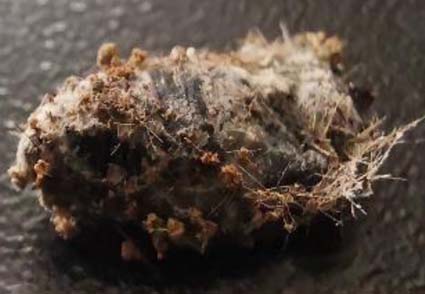
During a survey of entomopathogenetic fungi from Southwest China, a new species, Paracremonium lepidopterorum was isolated from a pupa. It differs from other Paracremonium species by its shorter cylindrical phialides and absence of slimy head of conidia and chlamydospores. Phylogenetic analyses based on the combined datasets of ITS+LSU+TUB confirmed that P. lepidopterorum is distinct from other species. The new species is formally described and illustrated, and compared to similar species.
References
Al-Bedak, O.A., Ismail, M.A. & Mohamed, R.A. (2019) Paracremonium moubasheri, a new species from an alkaline sediment of Lake Hamra in Wadi-El-Natron, Egypt with a key to the accepted species. Studies in Fungi 4 (1): 216–222. https://doi.org/10.5943/sif/4/1/23
Chen, W.H., Liu, C., Han, Y.F., Liang, J.D., Tian, W.Y. & Liang, Z.Q. (2019) Three novel insect-associated species of Simplicillium (Cordycipitaceae, Hypocreales) from Southwest China. MycoKeys 58: 83. https://doi.org/10.3897/mycokeys.58.37176
Crous, P.W., Wingfield, M.J., Burgess, T.I., Carnegie, A.J., Hardy, G.S.J., Smith, D., Summerell, B.A., Cano-Lira, J.F., Guarro, J., Houbraken, J., Lombard, L., Martín, M.P., Sandoval-Denis, M., Alexandrova, A.V., Barnes, C.W., Baseia, I.G., Bezerra, J.D.P., Guarnaccia, V., May, T.W., Hernández-Restrepo, M., Stchigel, A.M., Miller, A.N., Ordoñez, M.E., Abreu, V.P., Accioly, T., Agnello, C., Agustin Colmán, A., Albuquerque, C.C., Alfredo, D.S., Alvarado, P., Araújo-Magalhães, G.R., Arauzo, S., Atkinson, T., Barili, A., Barreto, R.W., Bezerra, J.L., Cabral, T.S., Rodríguez, F.C., Cruz, R.H.S.F., Daniëls, P.P., da Silva, B.D.B., de Almeida, D.A.C., de Carvalho Júnior, A.A., Decock, C.A., Delgat, L., Denman, S., Dimitrov, R.A., Edwards, J., Fedosova, A.G., Ferreira, R.J., Firmino, A.L., Flores, J.A., García, D., Gené, J., Giraldo, A., Góis, J.S., Gomes, A.A.M., Gonçalves, C.M., Gouliamova, D.E., Groenewald, M., Guéorguiev, B.V., Guevara-Suarez, M., Gusmão, L.F.P., Hosaka, K., Hubka, V., Huhndorf, S.M., Jadan, M., Jurjevi?, Ž., Kraak, B., Ku?era, V., Kumar, T.K.A., Kušan, I., Lacerda, S.R., Lamlertthon, S., Lisboa, W.S., Loizides, M., Luangsa-ard, J.J., Lysková, P., Mac Cormack, W.P., Macedo, D.M., Machado, A.R., Malysheva, E.F., Marinho, P., Mato?ec, N., Meijer, M., Meši?, A., Mongkolsamrit, S., Moreira, K.A., Morozova, O.V., Nair, K.U., Nakamura, N., Noisripoom, W., Olariaga, I., Oliveira, R.J.V., Paiva, L.M., Pawar, P., Pereira, O.L., Peterson, S.W., Prieto, M., Rodríguez-Andrade, E., Rojo De Blas, C., Roy, M., Santos, E.S., Sharma, R., Silva, G.A., Souza-Motta, C.M., Takeuchi-Kaneko, Y., Tanaka, C., Thakur, A., Smith, M.T., Tkal?ec, Z., Valenzuela-Lopez, N., van der Kleij, P., Verbeken, A., Viana, M.G., Wang, X.W., Groenewald, J.Z. & Lombard, L. (2017) Fungal Planet description sheets: 625–715. Persoonia 39: 270. https://doi.org/10.3767/persoonia.2017.39.11
Darriba, D., Taboada, G.L., Doallo, R. & Posada, D. (2012) jModelTest 2: more models, new heuristics and parallel computing. Nature Methods 9 (8): 772–772. https://doi.org/10.1038/nmeth.2109
Drummond, A. & Rambaut, A. (2007) BEAST: Bayesian evolutionary analysis by sampling trees. BMC Evolutionary Biology 7: 214. https://doi.org/10.1186/1471-2148-7-214
Glass, N.L. & Donaldson, G.C. (1995) Development of primer sets designed for use with the PCR to amplify conserved genes from filamentous ascomycetes. Applied and Environmental Microbiology 61 (4): 1323–1330. https://doi.org/10.1128/aem.61.4.1323-1330.1995
Katoh, K. & Standley, D.M. (2013) MAFFT multiple sequence alignment software version 7: improvements in performance and usability. Molecular Biology and Evolution 30 (4): 772–780. https://doi.org/10.1093/molbev/mst010
Liang, J.D., Han, Y.F., Zhang, J.W., Du, W., Liang, Z.Q. & Li, Z.Z. (2011) Optimal culture conditions for keratinase production by a novel thermophilic Myceliophthora thermophila strain GZUIFR-H49-1. Journal of Applied Microbiology 110: 871–880. https://doi.org/10.1111/j.1365-2672.2011.04949.x
Lombard, L., Van der Merwe, N.A., Groenewald, J.Z. & Crous, P.W. (2015) Generic concepts in Nectriaceae. Studies in Mycology 80: 189–245. https://doi.org/10.1016/j.simyco.2014.12.002
Lynch, S.C., Twizeyimana, M., Mayorquin, J.S., Wang, D.H., Na, F., Kayim, M., Kasson, M.T., Thu, P.Q., Bateman, C., Rugman-Jones, P., Hulcr, J., Stouthamer, R. & Hulcr, J. (2016) Identification, pathogenicity and abundance of Paracremonium pembeum sp. nov. and Graphium euwallaceae sp. nov.—two newly discovered mycangial associates of the polyphagous shot hole borer (Euwallacea sp.) in California. Mycologia 108 (2): 313–329. https://doi.org/10.3852/15-063
Ronquist, F., Teslenko, M., van der Mark, P., Ayres, D.L., Darling, A., Höhna, S., Larget, B., Liu, L., Suchard, M.A. & Huelsenbeck, J.P. (2012) MrBayes 3.2: efficient Bayesian phylogenetic inference and model choice across a large model space. Systematic Biology 61: 539–542. https://doi.org/10.1093/sysbio/sys029
Silvestro, D. & Michalak, I. (2012) raxmlGUI: a graphical front-end for RAxML. Organisms Diversity & Evolution 12 (4): 335–337. https://doi.org/10.1007/s13127-011-0056-0
Swofford, D.L. (2002) PAUP* 4.0b10: phylogenetic analysis using parsimony (*and other methods). Sunderland, MA, Sinauer.
Tamura, K., Stecher, G., Peterson, D., Filipski, A. & Kumar, S. (2013) MEGA6: molecular evolutionary genetics analysis version 6.0. Molecular Biology and Evolution 30: 2725–2729. https://doi.org/10.1093/molbev/mst197
Vaidya, G., Lohman, D.J. & Meier, R. (2011) SequenceMatrix: concatenation software for the fast assembly of multi-gene datasets with character set and codon information. Cladistics 27 (2): 171–180. https://doi.org/10.1093/molbev/mst197
White, T.J., Bruns, T., Lee, S. & Taylor, J. (1990) Amplification and direct sequencing of fungal ribosomal RNA genes for phylogenetics. In: Innis, M.A., Gelfand, D.H., Sninsky, J.J. & White, T.J. (Eds.) PCR protocols: a guide to methods and applications. Academic Press, New York. 315–322. https://doi.org/10.1016/B978-0-12-372180-8.50042-1
Zhang, Z.F., Liu, F., Zhou, X., Liu, X.Z., Liu, S.J. & Cai, L. (2017) Culturable mycobiota from Karst caves in China, with descriptions of 20 new species. Persoonia 39: 1–31. https://doi.org/10.3767/persoonia.2017.39.01
Zhang, Z.F., Zhou, S.Y., Eurwilaichitr, L., Ingsriswang, S., Raza, M., Chen, Q., Zhao, P., Liu, F. & Cai, L. (2020) Culturable mycobiota from Karst caves in China II, with descriptions of 33 new species. Fungal Diversity 106: 29–136. https://doi.org/10.1007/s13225-020-00453-7
Zou, X., Liu, A.Y., Liang, Z.Q., Han, Y.F. & Yang, M. (2010) Hirsutella liboensis, a new entomopathogenic species affecting Cossidae (Lepidoptera) in China. Mycotaxon 111 (1): 39–44. https://doi.org/10.5248/111.39
Chen, W.H., Liu, C., Han, Y.F., Liang, J.D., Tian, W.Y. & Liang, Z.Q. (2019) Three novel insect-associated species of Simplicillium (Cordycipitaceae, Hypocreales) from Southwest China. MycoKeys 58: 83. https://doi.org/10.3897/mycokeys.58.37176
Crous, P.W., Wingfield, M.J., Burgess, T.I., Carnegie, A.J., Hardy, G.S.J., Smith, D., Summerell, B.A., Cano-Lira, J.F., Guarro, J., Houbraken, J., Lombard, L., Martín, M.P., Sandoval-Denis, M., Alexandrova, A.V., Barnes, C.W., Baseia, I.G., Bezerra, J.D.P., Guarnaccia, V., May, T.W., Hernández-Restrepo, M., Stchigel, A.M., Miller, A.N., Ordoñez, M.E., Abreu, V.P., Accioly, T., Agnello, C., Agustin Colmán, A., Albuquerque, C.C., Alfredo, D.S., Alvarado, P., Araújo-Magalhães, G.R., Arauzo, S., Atkinson, T., Barili, A., Barreto, R.W., Bezerra, J.L., Cabral, T.S., Rodríguez, F.C., Cruz, R.H.S.F., Daniëls, P.P., da Silva, B.D.B., de Almeida, D.A.C., de Carvalho Júnior, A.A., Decock, C.A., Delgat, L., Denman, S., Dimitrov, R.A., Edwards, J., Fedosova, A.G., Ferreira, R.J., Firmino, A.L., Flores, J.A., García, D., Gené, J., Giraldo, A., Góis, J.S., Gomes, A.A.M., Gonçalves, C.M., Gouliamova, D.E., Groenewald, M., Guéorguiev, B.V., Guevara-Suarez, M., Gusmão, L.F.P., Hosaka, K., Hubka, V., Huhndorf, S.M., Jadan, M., Jurjevi?, Ž., Kraak, B., Ku?era, V., Kumar, T.K.A., Kušan, I., Lacerda, S.R., Lamlertthon, S., Lisboa, W.S., Loizides, M., Luangsa-ard, J.J., Lysková, P., Mac Cormack, W.P., Macedo, D.M., Machado, A.R., Malysheva, E.F., Marinho, P., Mato?ec, N., Meijer, M., Meši?, A., Mongkolsamrit, S., Moreira, K.A., Morozova, O.V., Nair, K.U., Nakamura, N., Noisripoom, W., Olariaga, I., Oliveira, R.J.V., Paiva, L.M., Pawar, P., Pereira, O.L., Peterson, S.W., Prieto, M., Rodríguez-Andrade, E., Rojo De Blas, C., Roy, M., Santos, E.S., Sharma, R., Silva, G.A., Souza-Motta, C.M., Takeuchi-Kaneko, Y., Tanaka, C., Thakur, A., Smith, M.T., Tkal?ec, Z., Valenzuela-Lopez, N., van der Kleij, P., Verbeken, A., Viana, M.G., Wang, X.W., Groenewald, J.Z. & Lombard, L. (2017) Fungal Planet description sheets: 625–715. Persoonia 39: 270. https://doi.org/10.3767/persoonia.2017.39.11
Darriba, D., Taboada, G.L., Doallo, R. & Posada, D. (2012) jModelTest 2: more models, new heuristics and parallel computing. Nature Methods 9 (8): 772–772. https://doi.org/10.1038/nmeth.2109
Drummond, A. & Rambaut, A. (2007) BEAST: Bayesian evolutionary analysis by sampling trees. BMC Evolutionary Biology 7: 214. https://doi.org/10.1186/1471-2148-7-214
Glass, N.L. & Donaldson, G.C. (1995) Development of primer sets designed for use with the PCR to amplify conserved genes from filamentous ascomycetes. Applied and Environmental Microbiology 61 (4): 1323–1330. https://doi.org/10.1128/aem.61.4.1323-1330.1995
Katoh, K. & Standley, D.M. (2013) MAFFT multiple sequence alignment software version 7: improvements in performance and usability. Molecular Biology and Evolution 30 (4): 772–780. https://doi.org/10.1093/molbev/mst010
Liang, J.D., Han, Y.F., Zhang, J.W., Du, W., Liang, Z.Q. & Li, Z.Z. (2011) Optimal culture conditions for keratinase production by a novel thermophilic Myceliophthora thermophila strain GZUIFR-H49-1. Journal of Applied Microbiology 110: 871–880. https://doi.org/10.1111/j.1365-2672.2011.04949.x
Lombard, L., Van der Merwe, N.A., Groenewald, J.Z. & Crous, P.W. (2015) Generic concepts in Nectriaceae. Studies in Mycology 80: 189–245. https://doi.org/10.1016/j.simyco.2014.12.002
Lynch, S.C., Twizeyimana, M., Mayorquin, J.S., Wang, D.H., Na, F., Kayim, M., Kasson, M.T., Thu, P.Q., Bateman, C., Rugman-Jones, P., Hulcr, J., Stouthamer, R. & Hulcr, J. (2016) Identification, pathogenicity and abundance of Paracremonium pembeum sp. nov. and Graphium euwallaceae sp. nov.—two newly discovered mycangial associates of the polyphagous shot hole borer (Euwallacea sp.) in California. Mycologia 108 (2): 313–329. https://doi.org/10.3852/15-063
Ronquist, F., Teslenko, M., van der Mark, P., Ayres, D.L., Darling, A., Höhna, S., Larget, B., Liu, L., Suchard, M.A. & Huelsenbeck, J.P. (2012) MrBayes 3.2: efficient Bayesian phylogenetic inference and model choice across a large model space. Systematic Biology 61: 539–542. https://doi.org/10.1093/sysbio/sys029
Silvestro, D. & Michalak, I. (2012) raxmlGUI: a graphical front-end for RAxML. Organisms Diversity & Evolution 12 (4): 335–337. https://doi.org/10.1007/s13127-011-0056-0
Swofford, D.L. (2002) PAUP* 4.0b10: phylogenetic analysis using parsimony (*and other methods). Sunderland, MA, Sinauer.
Tamura, K., Stecher, G., Peterson, D., Filipski, A. & Kumar, S. (2013) MEGA6: molecular evolutionary genetics analysis version 6.0. Molecular Biology and Evolution 30: 2725–2729. https://doi.org/10.1093/molbev/mst197
Vaidya, G., Lohman, D.J. & Meier, R. (2011) SequenceMatrix: concatenation software for the fast assembly of multi-gene datasets with character set and codon information. Cladistics 27 (2): 171–180. https://doi.org/10.1093/molbev/mst197
White, T.J., Bruns, T., Lee, S. & Taylor, J. (1990) Amplification and direct sequencing of fungal ribosomal RNA genes for phylogenetics. In: Innis, M.A., Gelfand, D.H., Sninsky, J.J. & White, T.J. (Eds.) PCR protocols: a guide to methods and applications. Academic Press, New York. 315–322. https://doi.org/10.1016/B978-0-12-372180-8.50042-1
Zhang, Z.F., Liu, F., Zhou, X., Liu, X.Z., Liu, S.J. & Cai, L. (2017) Culturable mycobiota from Karst caves in China, with descriptions of 20 new species. Persoonia 39: 1–31. https://doi.org/10.3767/persoonia.2017.39.01
Zhang, Z.F., Zhou, S.Y., Eurwilaichitr, L., Ingsriswang, S., Raza, M., Chen, Q., Zhao, P., Liu, F. & Cai, L. (2020) Culturable mycobiota from Karst caves in China II, with descriptions of 33 new species. Fungal Diversity 106: 29–136. https://doi.org/10.1007/s13225-020-00453-7
Zou, X., Liu, A.Y., Liang, Z.Q., Han, Y.F. & Yang, M. (2010) Hirsutella liboensis, a new entomopathogenic species affecting Cossidae (Lepidoptera) in China. Mycotaxon 111 (1): 39–44. https://doi.org/10.5248/111.39