

Abstract
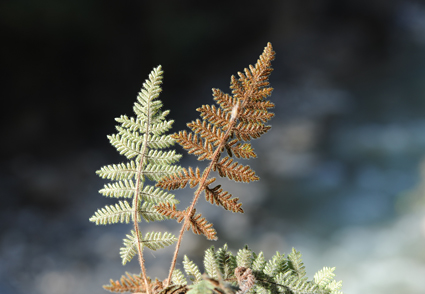
Cheilanthes qiaojiaensis, a new fern of Pteridaceae subfamily Cheilanthoideae, is described and illustrated. Morphologically, C. qiaojiaensis is similar to C. chusana and Aleuritopteris rufa in having plants hairiness and laminae elliptic-lanceolate, but the new species has plants covered with dense hairs throughout, petiole and rachis flattened to narrowly grooved, and false indusia wide and continuous. The phylogenetic analysis also shows that C. qiaojiaensis is not a close relative of either A. rufa or C. chusana.
References
Akaike, H. (1974) A new look at the statistical model identification. IEEE Transactions on Automatic Control 19: 716–723. https://doi.org/10.1109/TAC.1974.1100705
Brown, R. (1810) Prodromus floræ Novæ Hollandiæ et Insulæ Van-Diemen: exhibens characteres plantarum quas annis 1802–1805. R. Taylor & Co., London, 145 pp. https://doi.org/10.5962/bhl.title.52309
Ching, R.-C. (1941) The studies of Chinese ferns-XXXI. Hong Kong Naturalist 10: 194–204.
Darriba, D., Taboada, G.L., Doallo, R. & Posada, D. (2012) jModelTest 2: more models, new heuristics and parallel computing. Nature Methods 9: 772. https://doi.org/10.1038/nmeth.2109
Eiserhardt, W.L., Rohwer, J.G., Russell, S.J., Yesilyurt, J.C. & Schneider, H. (2011) Evidence for radiations of cheilanthoid ferns in the Greater Cape Floristic Region. Taxon 60: 1269–1283. https://doi.org/10.1002/tax.605004
Fée, A.L.A. (1852) Genera Filicum. Mémoires sur les Familles des Fougères V. Berger-Levrault, Strassburg, pp. 148, 153–154.
Gastony, G.J. & Rollo, D.R. (1995) Phylogeny and generic circumscriptions of Cheilanthoid ferns (Pteridaceae: Cheilanthoideae) inferred from rbcL nucleotide sequences. American Fern Journal 85: 341–360. https://doi.org/10.2307/1547814
Gastony, G.J. & Rollo, D.R. (1998) Cheilanthoid ferns (Pteridaceae: Cheilanthoideae) in the southwestern United States and adjacent Mexico—a molecular phylogenetic reassessment of generic lines. Aliso 17: 131–144. https://doi.org/10.5642/aliso.19981702.04
Hall, T.A. (1999) BioEdit: A user-friendly biological sequence alignment editor and analysis program for Windows 95/98/NT. Nucleic Acids Symposium Series 41: 95–98. https://doi.org/10.1021/bk-1999-0734.ch008
Hasebe, M., Omori, T., Nakazawa, M., Sano, T., Kato, M. & Iwatsuki, K. (1994) rbcL gene sequences provide evidence for the evolutionary lineages of leptosporangiate ferns. Proceedings of the National Academy of Sciences, USA 91: 5730–5734. https://doi.org/10.1073/pnas.91.12.5730
Huelsenbeck, J.P. & Ronquist, F. (2001) MRBAYES: Bayesian inference of phylogenetic trees. Bioinformatics 17: 754–755. https://doi.org/10.1093/bioinformatics/17.8.754
IUCN (2019) Guidelines for using the IUCN Red List Categories and Criteria. Version 14. Prepared by the Standards and Petitions Subcommittee.
Katoh, K. & Standley, D.M. (2013) MAFFT multiple sequence alignment software version 7: Improvements in performance and usability. Molecular Biology and Evolution 30: 772–780. https://doi.org/10.1093/molbev/mst010
Kirkpatrick, R.E.B. (2007) Investigating the monophyly of Pellaea (Pteridaceae) in the context of a phylogenetic analysis of cheilanthoid ferns. Systematic Botany 32: 504–518. https://doi.org/10.1600/036364407782250616
Kao, T.T., Rothfels, C.J., Melgoza-Castillo, A., Pryer, K.M. & Windham, M.D. (2020) Infraspecific diversification of the star cloak fern (Notholaena standleyi) in the deserts of the United States and Mexico. American Journal of Botany 107: 658–675. https://doi.org/10.1002/ajb2.1461
Li, F.-W., Kuo, L.-Y., Huang, Y.-M., Chiou, W.-L. & Wang, C.-N. (2010) Tissue-direct PCR, a rapid and extraction-free method for barcoding of ferns. Molecular Ecology Resources 10: 92–95. https://doi.org/10.1111/j.1755-0998.2009.02745.x
Link, J.H.F. (1841) Filicum species in horto regio Berolinensi cultae. Veit & Co., Berlin, pp. 59–60.
Mickel, J.T. (1979) The fern genus Cheilanthes in the continental United States. Phytologia 41: 431–437. https://doi.org/10.5962/bhl.part.20791
Miller, M.A., Pfeiffer, W. & Schwartz, T. (2010) Creating the CIPRES Science Gateway for inference of large phylogenetic trees. In: Proceedings of the Gateway Computing Environments Workshop (GCE), 14 November 2010. New Orleans, LA, pp. 1–8. https://doi.org/10.1109/GCE.2010.5676129
Nagalingum, N.S., Schneider, H. & Pryer, K.M. (2007) Molecular phylogenetic relationships and morphological evolution in the heterosporous fern genus Marsilea. Systematic Botany 32: 16–25. https://doi.org/10.1600/036364407780360256
Nadot, S., Bajon, R. & Lejeune, B. (1994) The chloroplast gene rps4 as a tool for the study of Poaceae phylogeny. Plant Systematics and Evolution 191: 27–38. https://doi.org/10.1007/BF00985340
PPG I (2016) A community-derived classification for extant lycophytes and ferns. Journal of Systematics and Evolution 54: 563–603. https://doi.org/10.1111/jse.12229
Prado, J., Rodrigues, C.D.N., Salatino, A. & Salatino, M.L.F. (2007) Phylogenetic relationships among Pteridaceae, including Brazilian species, inferred from rbcL sequences. Taxon 56: 355–368. https://doi.org/10.1002/tax.562008
Pryer, K.M., Smith, A.R., Hunt, J.S. & Dubuisson, J.Y. (2001) rbcL data reveal two monophyletic groups of filmy ferns (Filicopsida: Hymenophyllaceae). American Journal of Botany 88: 1118–1130. https://doi.org/10.2307/2657095
Rothfels, C.J., Windham, M.D., Grusz, A.L., Gastony, G.J. & Pryer, K.M. (2008) Toward a monophyletic Notholaena (Pteridaceae): Resolving patterns of evolutionary convergence in xeric-adapted ferns. Taxon 57: 712–724. https://doi.org/10.1002/tax.573005
Schuettpelz, E., Schneider, H., Huiet, L., Windham, M.D. & Pryer, K.M. (2007) A molecular phylogeny of the fern family Pteridaceae: Assessing overall relationships and the affinities of previously unsampled genera. Molecular Phylogenetics and Evolution 44: 1172–1185. https://doi.org/10.1016/j.ympev.2007.04.011
Schuettpelz, E., Korall, P & Pryer, K.M. (2006) Plastid atpA data provide improved support for deep relationships among ferns. Taxon 55: 897–906. https://doi.org/10.2307/25065684
Shing, K.-H. & Wu, S.-K. (1990) Sinopteridaceae. In: Ching, R.-C. & Shing, K.-H. (Eds.) Flora Reipublicae Popularis Sinicae, vol. 3 (1). Science Press, Beijing, pp. 97–173.
Shing, K.-H. (1993) A new genus, Paragymnopteris Shing separated from Gymnopteris Bernh. Indian Fern Journal 10: 226–231.
Smith, A.R. & Cranfill, R.B. (2002) Intrafamilial relationships of the thelypteroid ferns (Thelypteridaceae). American Fern Journal 92: 131–149. https://doi.org/10.1640/0002-8444(2002)092[0131:IROTTF]2.0.CO;2
Stamatakis, A., Hoover, P. & Rougemont, J. (2008) A rapid bootstrap algorithm for the RAxML Web servers. Systematic Biology 57: 758–771. https://doi.org/10.1080/10635150802429642
Swartz, O. (1806) Synopsis Filicum 5. Impensis bibliopolii novi academici, Kiliae, pp. 126–127.
Thiers, B. (2020) Index Herbariorum: a global directory of public herbaria and associated staff. New York Botanical Garden’s Virtual Herbarium. [http://sweetgum.nybg.org/science/ih/]
Trevisan, V.B.A. (1877) Mildella, nuovo genere, tipo di nuova tribu di Felci Polipodiacee. Reale Istituto Lombardo di Scienze e Lettere, Rendiconti 9: 810.
Wang, W., Yang, W.-L., Dou, P. & Zhang, G.-M. (2015a) A systematic study of Cheilosoria ferns based on four chloroplast DNA sequences. Chinese Bulletin of Botany 50: 310–320. https://doi.org/10.3724/SP.J.1259.2015.00310
Wang, W., Yang, W.-L., Mao, X.-X., Zhao, R.-R., Dou, P. & Zhang, G.-M. (2015b) The phylogenetic affinities of Pellaea connectens, a rare endemic Chinese fern. Phytotaxa 220: 30–42. https://doi.org/10.11646/phytotaxa.220.1.2
Yesilyurt, J.C., Barbara, T., Schneider, H., Russell, S., Culham, A. & Gibby, M. (2015) Identifying the generic limits of the cheilanthoid genus Doryopteris (Pteridaceae). Phytotaxa 221: 101–122. https://doi.org/10.11646/phytotaxa.221.2.1
Zhang, G.-M., Yatskievych, G., Hooper, E.A. & Ranker, T.A. (2013) Cheilanthoideae. In: Wu, Z.Y., Raven, P.H., Hong, D.Y. (Eds.) Flora of China. Vol. 2 (1). Science Press, Beijing; St. Louis: Missouri Botanical Garden Press. pp. 216–237.
Zhang, G.-M., Zhang, X.-C., Chen, Z.-D., Liu, H.-M. & Yang, W.-L. (2007) First insights in the phylogeny of Asian cheilanthoid ferns based on sequences of two chloroplast markers. Taxon 56: 369–378. https://doi.org/10.1002/tax.562009
Brown, R. (1810) Prodromus floræ Novæ Hollandiæ et Insulæ Van-Diemen: exhibens characteres plantarum quas annis 1802–1805. R. Taylor & Co., London, 145 pp. https://doi.org/10.5962/bhl.title.52309
Ching, R.-C. (1941) The studies of Chinese ferns-XXXI. Hong Kong Naturalist 10: 194–204.
Darriba, D., Taboada, G.L., Doallo, R. & Posada, D. (2012) jModelTest 2: more models, new heuristics and parallel computing. Nature Methods 9: 772. https://doi.org/10.1038/nmeth.2109
Eiserhardt, W.L., Rohwer, J.G., Russell, S.J., Yesilyurt, J.C. & Schneider, H. (2011) Evidence for radiations of cheilanthoid ferns in the Greater Cape Floristic Region. Taxon 60: 1269–1283. https://doi.org/10.1002/tax.605004
Fée, A.L.A. (1852) Genera Filicum. Mémoires sur les Familles des Fougères V. Berger-Levrault, Strassburg, pp. 148, 153–154.
Gastony, G.J. & Rollo, D.R. (1995) Phylogeny and generic circumscriptions of Cheilanthoid ferns (Pteridaceae: Cheilanthoideae) inferred from rbcL nucleotide sequences. American Fern Journal 85: 341–360. https://doi.org/10.2307/1547814
Gastony, G.J. & Rollo, D.R. (1998) Cheilanthoid ferns (Pteridaceae: Cheilanthoideae) in the southwestern United States and adjacent Mexico—a molecular phylogenetic reassessment of generic lines. Aliso 17: 131–144. https://doi.org/10.5642/aliso.19981702.04
Hall, T.A. (1999) BioEdit: A user-friendly biological sequence alignment editor and analysis program for Windows 95/98/NT. Nucleic Acids Symposium Series 41: 95–98. https://doi.org/10.1021/bk-1999-0734.ch008
Hasebe, M., Omori, T., Nakazawa, M., Sano, T., Kato, M. & Iwatsuki, K. (1994) rbcL gene sequences provide evidence for the evolutionary lineages of leptosporangiate ferns. Proceedings of the National Academy of Sciences, USA 91: 5730–5734. https://doi.org/10.1073/pnas.91.12.5730
Huelsenbeck, J.P. & Ronquist, F. (2001) MRBAYES: Bayesian inference of phylogenetic trees. Bioinformatics 17: 754–755. https://doi.org/10.1093/bioinformatics/17.8.754
IUCN (2019) Guidelines for using the IUCN Red List Categories and Criteria. Version 14. Prepared by the Standards and Petitions Subcommittee.
Katoh, K. & Standley, D.M. (2013) MAFFT multiple sequence alignment software version 7: Improvements in performance and usability. Molecular Biology and Evolution 30: 772–780. https://doi.org/10.1093/molbev/mst010
Kirkpatrick, R.E.B. (2007) Investigating the monophyly of Pellaea (Pteridaceae) in the context of a phylogenetic analysis of cheilanthoid ferns. Systematic Botany 32: 504–518. https://doi.org/10.1600/036364407782250616
Kao, T.T., Rothfels, C.J., Melgoza-Castillo, A., Pryer, K.M. & Windham, M.D. (2020) Infraspecific diversification of the star cloak fern (Notholaena standleyi) in the deserts of the United States and Mexico. American Journal of Botany 107: 658–675. https://doi.org/10.1002/ajb2.1461
Li, F.-W., Kuo, L.-Y., Huang, Y.-M., Chiou, W.-L. & Wang, C.-N. (2010) Tissue-direct PCR, a rapid and extraction-free method for barcoding of ferns. Molecular Ecology Resources 10: 92–95. https://doi.org/10.1111/j.1755-0998.2009.02745.x
Link, J.H.F. (1841) Filicum species in horto regio Berolinensi cultae. Veit & Co., Berlin, pp. 59–60.
Mickel, J.T. (1979) The fern genus Cheilanthes in the continental United States. Phytologia 41: 431–437. https://doi.org/10.5962/bhl.part.20791
Miller, M.A., Pfeiffer, W. & Schwartz, T. (2010) Creating the CIPRES Science Gateway for inference of large phylogenetic trees. In: Proceedings of the Gateway Computing Environments Workshop (GCE), 14 November 2010. New Orleans, LA, pp. 1–8. https://doi.org/10.1109/GCE.2010.5676129
Nagalingum, N.S., Schneider, H. & Pryer, K.M. (2007) Molecular phylogenetic relationships and morphological evolution in the heterosporous fern genus Marsilea. Systematic Botany 32: 16–25. https://doi.org/10.1600/036364407780360256
Nadot, S., Bajon, R. & Lejeune, B. (1994) The chloroplast gene rps4 as a tool for the study of Poaceae phylogeny. Plant Systematics and Evolution 191: 27–38. https://doi.org/10.1007/BF00985340
PPG I (2016) A community-derived classification for extant lycophytes and ferns. Journal of Systematics and Evolution 54: 563–603. https://doi.org/10.1111/jse.12229
Prado, J., Rodrigues, C.D.N., Salatino, A. & Salatino, M.L.F. (2007) Phylogenetic relationships among Pteridaceae, including Brazilian species, inferred from rbcL sequences. Taxon 56: 355–368. https://doi.org/10.1002/tax.562008
Pryer, K.M., Smith, A.R., Hunt, J.S. & Dubuisson, J.Y. (2001) rbcL data reveal two monophyletic groups of filmy ferns (Filicopsida: Hymenophyllaceae). American Journal of Botany 88: 1118–1130. https://doi.org/10.2307/2657095
Rothfels, C.J., Windham, M.D., Grusz, A.L., Gastony, G.J. & Pryer, K.M. (2008) Toward a monophyletic Notholaena (Pteridaceae): Resolving patterns of evolutionary convergence in xeric-adapted ferns. Taxon 57: 712–724. https://doi.org/10.1002/tax.573005
Schuettpelz, E., Schneider, H., Huiet, L., Windham, M.D. & Pryer, K.M. (2007) A molecular phylogeny of the fern family Pteridaceae: Assessing overall relationships and the affinities of previously unsampled genera. Molecular Phylogenetics and Evolution 44: 1172–1185. https://doi.org/10.1016/j.ympev.2007.04.011
Schuettpelz, E., Korall, P & Pryer, K.M. (2006) Plastid atpA data provide improved support for deep relationships among ferns. Taxon 55: 897–906. https://doi.org/10.2307/25065684
Shing, K.-H. & Wu, S.-K. (1990) Sinopteridaceae. In: Ching, R.-C. & Shing, K.-H. (Eds.) Flora Reipublicae Popularis Sinicae, vol. 3 (1). Science Press, Beijing, pp. 97–173.
Shing, K.-H. (1993) A new genus, Paragymnopteris Shing separated from Gymnopteris Bernh. Indian Fern Journal 10: 226–231.
Smith, A.R. & Cranfill, R.B. (2002) Intrafamilial relationships of the thelypteroid ferns (Thelypteridaceae). American Fern Journal 92: 131–149. https://doi.org/10.1640/0002-8444(2002)092[0131:IROTTF]2.0.CO;2
Stamatakis, A., Hoover, P. & Rougemont, J. (2008) A rapid bootstrap algorithm for the RAxML Web servers. Systematic Biology 57: 758–771. https://doi.org/10.1080/10635150802429642
Swartz, O. (1806) Synopsis Filicum 5. Impensis bibliopolii novi academici, Kiliae, pp. 126–127.
Thiers, B. (2020) Index Herbariorum: a global directory of public herbaria and associated staff. New York Botanical Garden’s Virtual Herbarium. [http://sweetgum.nybg.org/science/ih/]
Trevisan, V.B.A. (1877) Mildella, nuovo genere, tipo di nuova tribu di Felci Polipodiacee. Reale Istituto Lombardo di Scienze e Lettere, Rendiconti 9: 810.
Wang, W., Yang, W.-L., Dou, P. & Zhang, G.-M. (2015a) A systematic study of Cheilosoria ferns based on four chloroplast DNA sequences. Chinese Bulletin of Botany 50: 310–320. https://doi.org/10.3724/SP.J.1259.2015.00310
Wang, W., Yang, W.-L., Mao, X.-X., Zhao, R.-R., Dou, P. & Zhang, G.-M. (2015b) The phylogenetic affinities of Pellaea connectens, a rare endemic Chinese fern. Phytotaxa 220: 30–42. https://doi.org/10.11646/phytotaxa.220.1.2
Yesilyurt, J.C., Barbara, T., Schneider, H., Russell, S., Culham, A. & Gibby, M. (2015) Identifying the generic limits of the cheilanthoid genus Doryopteris (Pteridaceae). Phytotaxa 221: 101–122. https://doi.org/10.11646/phytotaxa.221.2.1
Zhang, G.-M., Yatskievych, G., Hooper, E.A. & Ranker, T.A. (2013) Cheilanthoideae. In: Wu, Z.Y., Raven, P.H., Hong, D.Y. (Eds.) Flora of China. Vol. 2 (1). Science Press, Beijing; St. Louis: Missouri Botanical Garden Press. pp. 216–237.
Zhang, G.-M., Zhang, X.-C., Chen, Z.-D., Liu, H.-M. & Yang, W.-L. (2007) First insights in the phylogeny of Asian cheilanthoid ferns based on sequences of two chloroplast markers. Taxon 56: 369–378. https://doi.org/10.1002/tax.562009