
Abstract
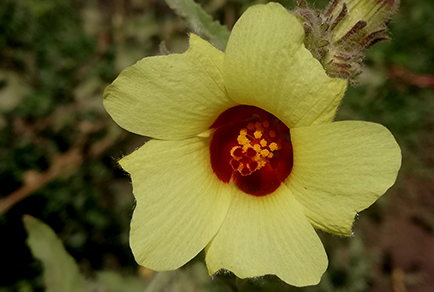
As part of the floristic surveys documenting ongoing updates to the Egyptian flora through systematic revisions, Cravenia panduriformis is recorded as a new genus and species record from the Aswan Reservoir area, a novel contribution to the flora of the Nile region. The present study provides a comprehensive description of this taxon’s morphological, anatomical, palynological, and seed coat features. The study reports the chromosome number (2n = 24) for the Egyptian population of Cravenia panduriformis, adding new cytogenetic data to complement previous records from other geographic regions. Furthermore, it includes observations regarding its habitat and presents images for easy identification.
References
- Abbas, A.M., Ayed, F.A.A., Sheded, M.G., Alrumman, S.A., Radwan, T.A.A. & Badry, M.O. (2021) Vegetation analysis and environmental relationships of riverain plants in the Aswan Reservoir, Egypt. Plants 10 (12): a2712. https://doi.org/10.3390/plants10122712
- Abdel Khalik, K., Al-Ruzayza, S., Assiri, A. & Elkordy, A. (2021) Pollen morphology of Malvaceae genera from Saudi Arabia and its taxonomic significance. Australian Journal of Crop Science 15 (5): 725–742. https://doi.org/10.21475/ajcs.21.15.05.p3129
- Alefeld, F.G.C. (1863) Beiträge zur Malvaceenkunde. Oesterreichische Botanische Zeitschrift 13: 10–15. [https://www.biodiversitylibrary.org/page/28756516#page/18/mode/1up]
- Badry, M.O. (2018) Biosystematic studies on some genera of Malvaceae (s.l.). Ph. D. Thesis, Faculty of Science, South Valley University, Egypt, 590 pp.
- Badry, M.O., Radwan, T.A.A., Ayed, F.A.A. & Sheded, M.G. (2019a) Floristic diversity of riparian plants in Aswan Reservoir at the extreme south of the River Nile, Upper Egypt: a closed ecological system. Biosciences Biotechnology Research Asia 16 (3): 595–609. https://doi.org/10.13005/bbra/2775
- Badry, M.O., Tate, J.A., Joshi, P., Abbas, A.M., Hamed, S.T. & Sheded, M.G. (2019b) Can morphology and chromosome number contribute to species delimitation? A case in the Hibiscus trionum complex (Tribe Hibisceae, Malvaceae). Phytotaxa 416 (4): 278–286. https://doi.org/10.11646/phytotaxa.416.4.6
- Badry, M.O., Tate, J.A. & Sheded, M.G. (2018) A new record of Abutilon grandifolium (subfamily Malvoideae, Malvaceae) from Qena Governorate, Egypt. Phytotaxa 382 (3): 255–266. https://doi.org/10.11646/phytotaxa.382.3.2
- Badry, M.O., Tate, J.A., Sheded, M.G., El-Naggar, S.M. & Hamed, S.T. (2015) Macro- and micro-morphological characters of Hibiscus diversifolius Jacq. subsp. diversifolius (Malvaceae): A new record for the flora of Egypt. Feddes Repertorium 126 (1–2): 37–47. https://doi.org/10.1002/fedr.201500016
- Bojnanský, V. & Fargašová, A. (2007) Taxonomy and morphology of seeds. In: Bojnanský, V. & Fargašová, A. Atlas of seeds and fruits of Central and East-European Flora. Springer Netherlands, Dordrecht, pp. 1–954. https://doi.org/10.1007/978-1-4020-5362-7
- Boulos, L. (1966) Flora of the Nile Region in Egyptian Nubia. Feddes Repertorium 73 (3): 184–215. https://doi.org/10.1002/fedr.19660730305
- Boulos, L. (2000) Flora of Egypt, Volume 2: Geraniaceae–Boraginaceae. Al Hadara Publishing, Cairo, 352 pp.
- Boulos, L. (2009) Flora of Egypt checklist, revised annotated edition. Al Hadara Publishing, Cairo, 410 pp.
- Brink, M. & Achigan-Dako, E.G. (2012) Plant resources of Tropical Africa 16: Fibers. ROTA Foundation/CTA, Wageningen, 602 pp. [https://edepot.wur.nl/565639]
- Burman, N.L. (1768) Nicolai Laurentii Burmanni Flora Indica: cui accedit series zoophytorum Indicorum, nec non prodromus florae Capensis. Cornelium Haek, Amsterdam, 257 pp. https://doi.org/10.5962/bhl.title.60581
- Cavanilles, A.J. (1785–1787) Monadelphiae classis dissertationes decem. Diss. 1–3. Apud F.D. Didot, Paris, 187 pp. https://doi.org/10.5962/bhl.title.44902
- Clarke, J. (1960) Preparation of leaf epidermis for topographic study. Stain Technology 35 (1): 35–39. https://doi.org/10.3109/10520296009114713
- Cotton, R. (1974) Cytotaxonomy of the genus Vulpia. Ph.D Thesis, University of Manchester, USA.
- Darbyshire, I., Kordofani, M., Farag, I., Candiga, R. & Pickering, H. (2015) The plants of Sudan and South Sudan: an annotated checklist. Royal Botanic Gardens, Kew, 420 pp.
- Darlington, C.D. & Cour, L.F. La (1976) The handling of chromosomes. George Allen and Unwin, London, 201 pp.
- Dasgupta, A. & Bhatt, R.P. (1982) Cytotaxonomy of Malvaceae III. Meiotic studies of Hibiscus, Abelmoschus, Azanza, Thespesia, Malachra, Urena and Pavonia. Cytologia 47 (1): 109–116. https://doi.org/10.1508/cytologia.47.109
- De Candolle, A.P. (1824) Prodromus systematis naturalis regni vegetabilis, sive, Enumeratio contracta ordinum generum specierumque plantarum huc usque cognitarium, juxta methodi naturalis, normas digesta. Vol. 1. Sumptibus Sociorum Treuttel et Würtz, Paris, 745 pp. https://doi.org/10.5962/bhl.title.286
- Diaz, K.V.L. (2019) Formalin-Aceto-Alcohol (F.A.A.) solution for killing, fixing and pickling botanical specimen. Institute of Biological Sciences, University of the Philippines Los Baños, Laguna, 2 pp. https://doi.org/10.13140/RG.2.2.12088.80649
- El-Beheiry, M., Hosni, H., Sharaf El-din, A., Shaltout, S.K. & Ahmed, D. (2020) Updating the checklist of the alien flora in Egypt. Taeckholmia 40 (1): 41–56. https://doi.org/10.21608/taec.2020.21300.1011
- El-Hadidi, M.N. (2000) Flora Aegyptiaca, Vol. 1. Palm Press, Cairo, 170 pp.
- El-Hadidi, M.N. & Fayed, A.A. (1995) Materials for excursion Flora of Egypt. Taeckholmia 15: 1–283.
- El-Hadidi, M.N., Hosni, H.A., El-Hadidy, A.M.H. & Araffa, S. (1999) Malvaceae in the flora of Egypt: 1. Systematic revision of the indigenous taxa. Taeckholmia 19 (2): 127–146. https://doi.org/10.21608/taec.1999.12641
- El-Kholy, M.A., Kasem, W.T. & Mabrouk, A.S. (2011) Taxonomic evaluation using pollen grain sculpture and seed coat characters of 11 taxa of genus Hibiscus (Malvaceae) in Egypt. Annals of Agricultural Sciences 56 (1): 9–15. https://doi.org/10.1016/j.aoas.2011.05.006
- Elkordy, A., El-Garf, I.A., Osman, A.K., Abdallah, N.Y. & Badry, M.O. (2022) Onopordum arenarium (Desf.) Pomel (Asteraceae), a noteworthy record from Egypt. Egyptian Journal of Botany 62 (3): 811–815. https://doi.org/10.21608/ejbo.2022.135635.1973
- El Naggar, S.M. (2001) Systematic implications of seed coat morphology in Malvaceae. Pakistan Journal of Biological Sciences 4 (7): 822–828. https://doi.org/10.3923/pjbs.2001.822.828
- Evert, R.F. & Eichhorn, S.E. (2006) Esau’s plant anatomy: meristems, cells, and tissues of the plant body: their structure, function, and development. 3rd edn. John Wiley & Sons, Inc., Hoboken, 601 pp. https://doi.org/10.1002/0470047380
- Fahn, A. (1982) Plant anatomy. Pergamon Press, Oxford & New York, 544 pp.
- Fryxell, P.A. & Stelly, D.M. (1993) Documented chromosome numbers 1993: 2. Additional chromosome counts in the Malvaceae. SIDA, Contributions to Botany 15 (4): 639–647. [https://www.jstor.org/stable/41967064]
- Garcke, A. (1849) Kritische Bemerkungen zu der Familie der Malvaceen nebst Beschreibung neuer Arten aus derselben. Botanische Zeitung 7: 849–855. [https://www.biodiversitylibrary.org/page/33805723#page/449/mode/1up]
- Gray, A. (1849) Plantæ Fendlerianæ Novi-Mexicanæ: an account of a collection of plants made chiefly in the vicinity of Santa Fé, New Mexico, by Augustus Fendler; with descriptions of the new species, critical remarks, and characters of other undescribed or little known plants from surrounding regions. Memoirs of the American Academy of Arts and Sciences New Series 4 (1): 1–116. https://doi.org/10.2307/25058153
- Guillemin, J.A., Perrottet, G.S. & Richard, A. (1831) Florae Senegambiae tentamen, seu historia plantarum in diversis Senegambiae regionibus a peregrinatoribus Perrottet et Leprieur detectarum. Treuttel et Wurtz, Paris, 316 pp. https://doi.org/10.5962/bhl.title.595
- Halbritter, H., Ulrich, S., Grímsson, F., Weber, M., Zetter, R., Hesse, M., Buchner, R., Svojtka, M. & Frosch-Radivo, A. (2018) Illustrated pollen terminology, 2nd edn. Springer, Cham, 483 pp. https://doi.org/10.1007/978-3-319-71365-6
- Hanes, M.M., Blanchard, O.J., Valencia-D., J., McLay, T., Abbott, J.R., McDaniel, S.F., Barrett, R.L., Mathews, S. & Neubig, K.M. (2024) Phylogenetic relationships within Tribe Hibisceae (Malvaceae) reveal complex patterns of polyphyly in Hibiscus and Pavonia. Systematic Botany 49 (1): 77–116. https://doi.org/10.1600/036364424X17114831879189
- Hasskarl, O. (1843) Adnotationes de plantis quibusdam Javanicis nonnullisque Japonicis, haud rite cognitis, e Catalogo Horti Bogoriensis excerptae. Accedunt nonnulae novae species. Tijdschrift voor Natuurlijke Geschiedenis en Physiologie 10: 115–150. [https://www.biodiversitylibrary.org/page/13477240#page/137/mode/1up]
- Hochreutiner, B.P.G. (1900) Révision du genre Hibiscus. Annuaire du Conservatoire et du jardin botaniques de Genève 4: 23–191. [https://www.biodiversitylibrary.org/item/111659#page/35/mode/1up]
- Jaubert, H.-F. & Spach, É. (1855) Illustrationes plantarum orientalium, auctoribus comite Jaubert et Eduardo Spach. Roret Bibliopolam, Paris, 444 pp.
- Johansen, D.A. (1940) Plant microtechnique. McGraw-Hill Publishing Company, Ltd., London, 523 pp.
- Juswara, L.S. & Craven, L.A. (2005) The Hibiscus panduriformis complex (Malvaceae) in Australia. Blumea 50 (2): 389–405. https://doi.org/10.3767/000651905X623067
- Linnaeus, C. (1753) Species plantarum: Exhibentes plantas rite cognitas, ad genera relatas, cum differentiis specificis, nominibus trivialibus, synonymis selectis, locis natalibus, secundum systema sexuale digestas. Vol. 2. Impensis Laurentii Salvii, Holmiae, 673 pp. https://doi.org/10.5962/bhl.title.37656
- Mapaura, A. & Timberlake, J. (2004) A checklist of Zimbabwean vascular plants. Southern African Botanical Diversity Network Report No. 33. SABONET, Pretoria and National Herbarium & Botanic Garden, Harare, 148 pp. [https://www.sanbi.org/wp-content/uploads/2018/04/sabonet-report-no-33-checklist-zimbabwean-vascular-plants.pdf]
- Medikus, F.K. (1787) Ueber einige künstliche Geschlecter aus der Malven-Familie. Hof- und Akademischen Buchhandlung, Mannheim. [https://www.digitale-sammlungen.de/en/view/bsb10302489?page=1]
- Metcalfe, C.R. & Chalk, L. (1957) Anatomy of the Dicotyledons: leaves, stem and wood in relation to taxonomy, with notes on economic use, Vol. I. 2nd edn. Clarendon Press, Oxford, 806 pp. [https://archive.org/details/anatomyofthedico033552mbp/mode/2up]
- Metcalfe, C.R. & Chalk, L. (1979) Anatomy of the dicotyledons. Systematic anatomy of leaf and stem, with a brief history of the subject, Vol. 1. 2nd edn. Clarendon Press, Oxford, 276 pp.
- Miller, P. (1754) The gardeners dictionary: containing the methods of cultivating and improving all sorts of trees, plants, and flowers, for the kitchen, fruit, and pleasure gardens, as also those which are used in medicine: with directions for the culture of vineyards, and making of wine in England, 4th edn, vol. 1. John & James Rivington, London, 524 pp. https://doi.org/10.5962/bhl.title.79061
- Mitchell, A.S. (1982) Economic aspects of the Malvaceae in Australia. Economic Botany 36 (3): 313–322. [https://www.jstor.org/stable/4254404]
- Mobarak, O.M.M. & El-khanagry, S.S.G. (2017) Anoda cristata (L.) Schlechter a new weed species in the Egyptian weed flora. American-Eurasian Journal of Agricultural & Environmental Science 17 (4): 284–287.
- Nassar, M.A. & El-Sahhar, K.F. (1998) Botanical preparations and microscopy (Microtechnique). Academic Bookshop, Dokki, Giza, 219 pp.
- POWO. (2025) Plants of the World Online. Facilitated by the Royal Botanic Gardens, Kew. Available from: http://powo.science.kew.org/ (accessed 2 October 2025)
- Punt, W., Hoen, P.P.P., Blackmore, S., Nilsson, S. & Le Thomas, A. (2007) Glossary of pollen and spore terminology. Review of Palaeobotany and Palynology 143 (1–2): 1–81. https://doi.org/10.1016/j.revpalbo.2006.06.008
- Salisbury, R.A. (1796) Prodromus stirpium in horto ad Chapel Allerton vigentium. [s.n.], Londin, 422 pp. https://doi.org/10.5962/bhl.title.427
- Scopoli, G.A. (1777) Introductio ad historiam naturalem sistens genera lapidum, plantarum, et animalium: hactenus detecta, caracteribus essentialibus donata, in tribus divisa, subinde ad leges naturae. Wolfgangum Gerle, Pragae, 540 pp. https://doi.org/10.5962/bhl.title.10827
- Setshogo, M.P. (2005) Preliminary checklist of the plants of Botswana. Southern African Botanical Diversity Network Report No. 37. SABONET, Pretoria and University of Botswana Herbarium, Gaborone, 161 pp. [https://www.sanbi.org/wp-content/uploads/2018/04/sabonet-report-no-37-preliminary-checklist-plants-botswana.pdf]
- Shaheen, N., Ajab, M., Yasmin, G. & Hayat, M.Q. (2009) Diversity of foliar trichomes and their systematic relevance in the genus Hibiscus (Malvaceae). International Journal of Agriculture & Biology 11: 279–284.
- Shamso, E.M., Hosni, H.A. & Rabei, S.H. (2023) Contribution to the Flora of Egypt: A critical inventory of newly recorded vascular taxa of Egypt. Scientific Journal for Damietta Faculty of Science 13 (3): 111–149. https://doi.org/10.21608/sjdfs.2023.247544.1141
- Shamso, E.M. & Khattab, A.A. (2016) Phenetic relationship between Malvaceae s.s. and its related families. Taeckholmia 36: 115–135. https://doi.org/10.21608/taec.2016.11956
- Sheded, M.G., Ayed, F.A.A., Radwan, T.A.A. & Ahmed, D.A. (2024) Contribution to Egypt’s Flora: new records from Nile Islands, South Valley, Egypt. Phytotaxa 660 (1): 22–34. https://doi.org/10.11646/phytotaxa.660.1.2
- Solereder, H. (1908) Systematic anatomy of the dicotyledons: a handbook for laboratories of pure and applied botany. Vol. 2. Clarendon Press, Oxford, 645 pp. [https://archive.org/details/in.ernet.dli.2015.217381/mode/2up]
- Spanoghe, J.B. (1841) Prodromus Florae Timorensis. Linnaea 15: 161–208. [https://www.biodiversitylibrary.org/page/105023#page/164/mode/1up]
- Täckholm, V. (1956) Students’ flora of Egypt. Vol. 1. Anglo-Egyptian Bookshop, Cairo, 649 pp.
- Täckholm, V. (1974) Student’s Flora of Egypt. 2nd edn. Cairo University, Cairo, 649 pp.
- Thiers, B. (2025, continously updated) Index Herbariorum: A global directory of public herbaria and associated staff. New York Botanical Garden’s Virtual Herbarium. Available from: http://sweetgum.nybg.org/science/ih/ (accessed 7 August 2025)
- Ulbrich, E. (1915) Eine neue Hibiscus-Art aus dem tropischen Afrika (H. Friesii). Repertorium Specierum Novarum Regni Vegetabilis 13: 521–523. [https://www.biodiversitylibrary.org/item/7035#page/528/mode/1up]
- Wallich, N. (1829) A numerical list of dried specimens of plants in the East India Company’s Museum: collected under the superintendence of Dr. Wallich of the Company’s botanic garden at Calcutta. [s.n.], London, 306 pp. https://doi.org/10.5962/bhl.title.1917
- Wang, C.-M. & Li, C.-Y. (2013) Hibiscus panduriformis Burm. f. (Malvaceae), a newly naturalized plant in Taiwan. National Taiwan Museum Academic Journal 66 (2): 47–53. https://doi.org/10.6532/JNTM.2013.66(2).02